李叔同油画《半裸女像》的发现与初考

内容提要:本文对中央美术学院美术馆发现李叔同油画《半裸女像》的过程进行了介绍,并且初步考证了20世纪中国油画史上这一重要作品的流传与收藏过程。

关键词:李叔同;油画;半裸女像;考证


2011年我们与北京大学共同策划“民国时期的人、艺、事”展览,拟前往澳门展出[1],在这一过程中,我们对中央美术学院民国时期藏品作了认真细致的整理,在中央美院美术馆的库房里发现并确认了像李毅士、吴法鼎、张安治、孙宗慰等的多件作品,其中有些作品尺寸很大,是艺术家的代表之作。这些发现,引出了有关中央美院的前身北平艺专的一些“人、艺、事”。如李毅士的作品,画的是他的同事、当时北平艺专的两位教授陈师曾、王梦白,张安治的1932年巨幅作品(222.5×129cm)是当年徐悲鸿点名收藏的,等等。不过,最重要的发现是,被长期认为“不见了”或“不知在何处”的李叔同油画代表作《半裸女像》。(图1,见本刊封2彩图)这件作品在画面上目前没有发现有署名。

1568689870857879.png

图1 《半裸女像》 油画 91cm×116.5cm 约1909年作 中央美术学院美术馆藏

据中央美术学院“图书馆陈列室物品登录簿(总括)”(手抄账本)登记:“品名:吴法鼎半裸女像,布/登记号:2011-甲/凭单号:1/西方艺术-艺术-册:1/西方艺术-其他-金额:500:00”。[2]

数据库电子账本登录为:“欧洲作品登记表/序号:72/总号:2011/柜架号:2-3-8/名称:半裸女像/材质:布/尺寸:90×116”(其他的“分类号”、“作者”、“国籍”、“画种”、“年代”栏都没有填写)。[3]两种登记的品名并不一致。登记的尺寸与实际尺寸略有出入,实际尺寸为:91×116.5cm。

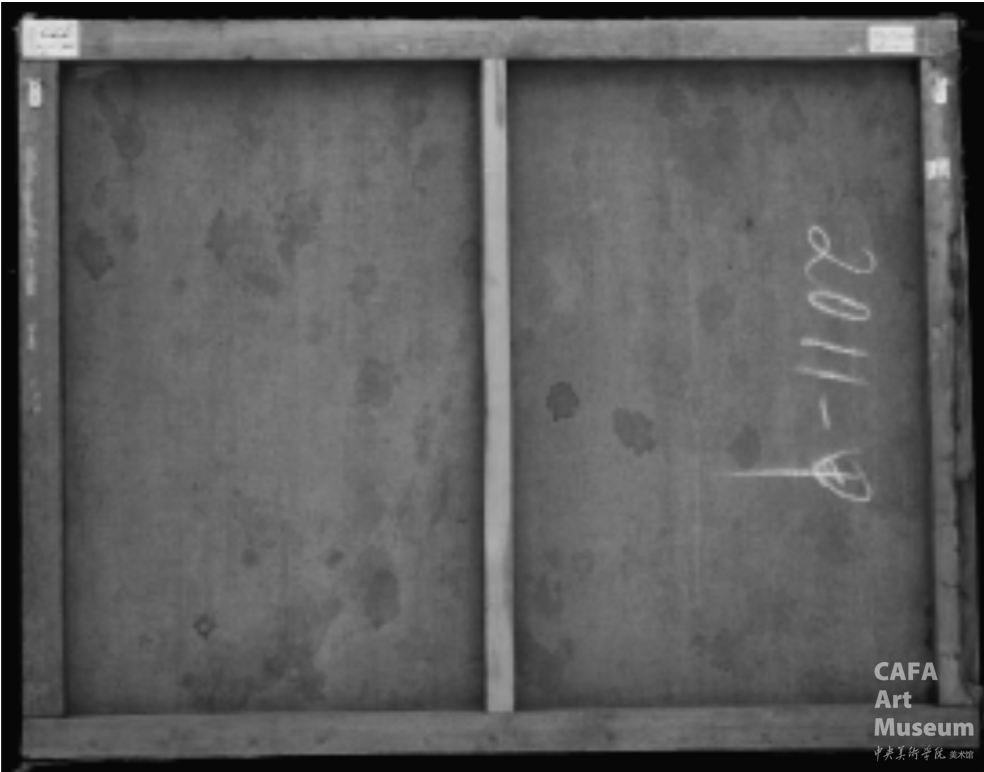
从作品状况看出,画面保护基本完好,有几处卷折及色彩脱落的痕迹,色彩较灰暗及有灰尘积存的痕迹,无外框,内框较旧,但好像不是原框;背后画布较旧,但基本无损坏;画布边缘有个别处破损,背面有较大的白色笔书写的登记号“2011-甲”,贴有两处纸质库房标签。(图2)
1568689897942846.png

图2 作品背面图

左上角标签为:“中央美术学院陈列馆藏/柜架号:2-3-8-(136)/题目:半身裸女像/作者:空/年代:空/规格:90×116,5/质地:麻布/总帐号:2011/分类号:空”

右上角标签:“总帐号:2011/题目:女人体半身像/作者:空/排架号:3-油-1(下)”。

这件作品一直存放在“外国作品”区域,所登记的“柜架号:2-3-8,”即“欧洲作品”库架。因此,库房工作人员一直以为这是一幅外国佚名的作品。

这次在整理民国时期作品的过程中,工作人员觉得这件“半裸女像”似曾相识,画法上也有民国早期油画的一些特点。因此,我们查阅了大量相关的文献和史料,发现这幅作品与李叔同1920年发表于《美育》第一期(中华美育会发行)上的《女》(油画,上海专科师范学校藏)应该是同一幅画。我们又做较详细的查证和比对,初步确定它就是日后为许多中国美术史论著所一再提及、论述和介绍的李叔同的代表作《半裸女像》。[4]

这幅1920年就发表于《美育》杂志、并且发表的当期当页上明确注明是“上海专科师范学校藏”的作品,怎么最终存放在中央美术学院的库房里?它是什么时候归于中央美院的?整个经过怎样?我们带着种种疑问,开始了关于这幅作品来龙去脉的考索和查证。


一、与这件作品相关的文献记载

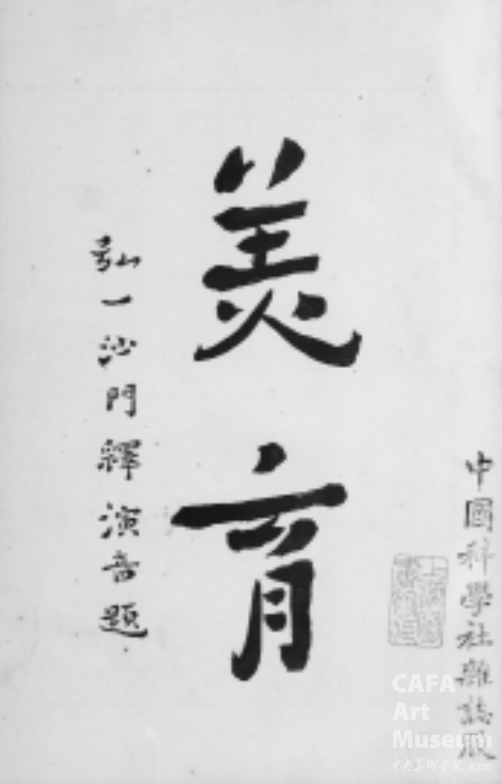
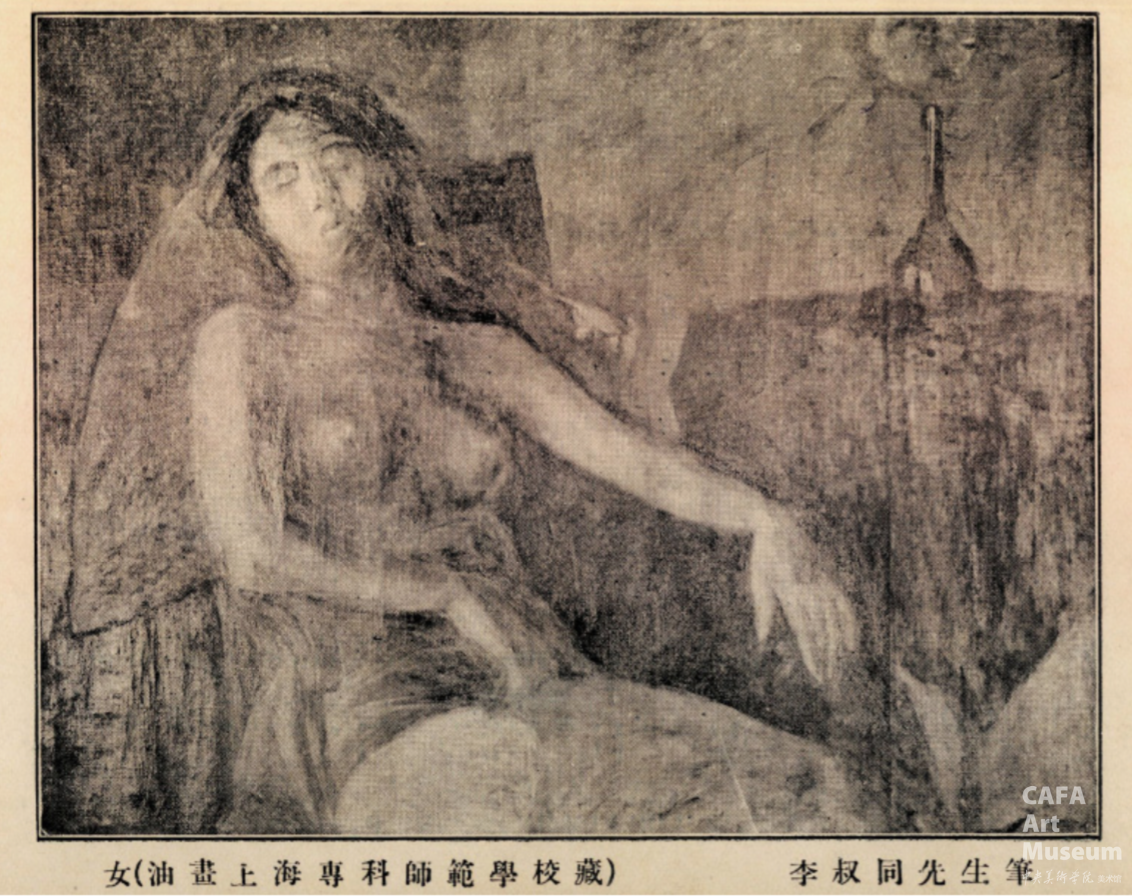
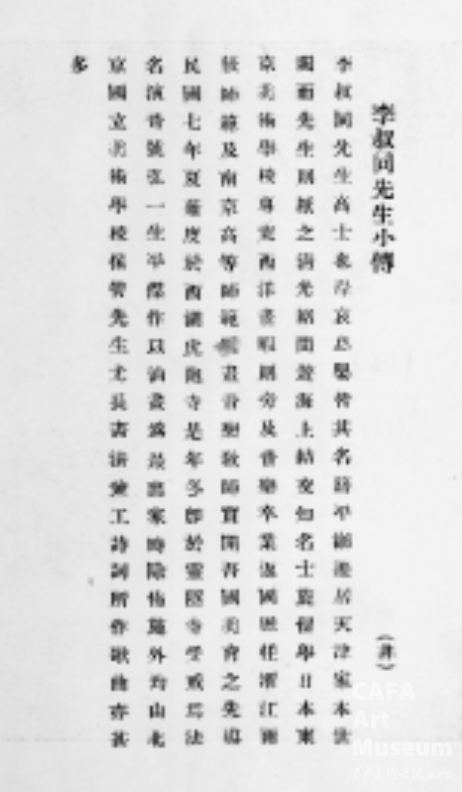
1、就目前查阅到的资料看,这件作品最早刊登于1920年4月20日在上海发行的《美育》第一期第二页上,该画下端注明的标题、画种、藏处和作者为:“《女》(油画,上海专科师范学校藏)李叔同先生笔”。[5](图3,见本刊封2彩图)并附有由“非”(即吴梦非)撰写的“李叔同先生小传”。(图4)《美育》系中华美育会发行,由吴梦非、丰子恺、刘质平--李叔同的三位门生创办,此一期《美育》的封面“美育”两字为李叔同所书。(图5)《美育》杂志开本较小,约高22公分,宽15公分,《女》作品的图版制版印刷质量较差,有较明显的修版痕迹。
1568689939535940.png
图3 《女》 (油画,上海专科师范学校藏)李叔同先生笔 发表于1920年4月20日发行的《美育》第一期
1568689972446654.png

图4 《美育》第一期登载的 “李叔同先生小传”。

1568689984460408.png

图 5 《美育》第一期封面, “美育”两字为李叔同所书

2、李叔同1918年农历7月出家,据李叔同在1922年农历4月初六日写给他侄儿李圣章的信说,“戊午二月,发愿入山剃染,修习佛法,普利含识,以四阅月力料理公私诸事。凡油画,美术书籍,寄赠北京美术学校(尔欲阅者,可往探询之。);音乐书赠刘子质平;一切书杂另物赠丰子子恺(二子皆在上海专科师范,是校为吾门人辈创立)。布置既毕,乃于五月下旬入大慈山(学校夏季考试,提前为之)。七月十三日剃染出家,九月在灵隐受戒⋯⋯”[6]

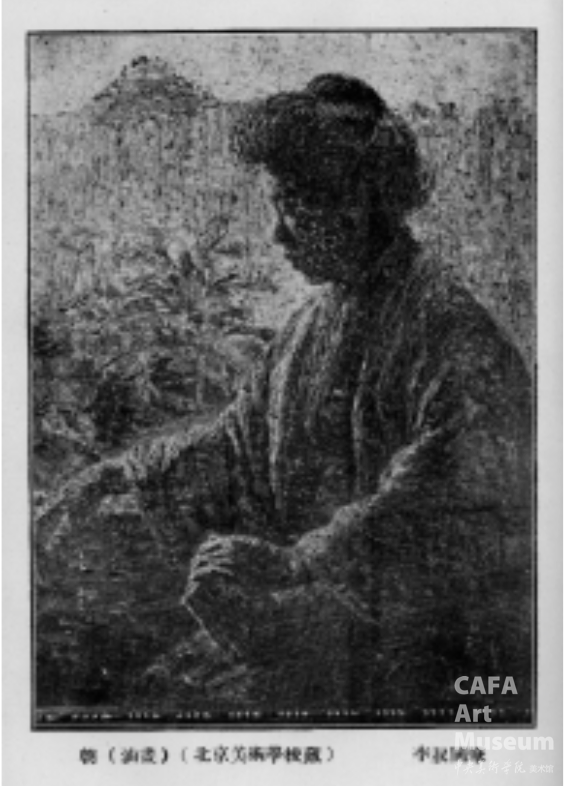
3、李叔同是1918年农历七月阳历8月19日出家,而在一年半后《美育》杂志创刊号刊登《女》这件油画作品,作品藏处是“上海专科师范学校”。《美育》杂志是李叔同的“门人辈”丰子恺、吴梦非、刘质平等三人于1919年发起的“中华美育会”的刊物,李叔同为该刊题写“美育”两字;上海专科师范学校也是李叔同这三位门生:丰子恺、吴梦非、刘质平所办[7],那么,在李叔同出家不久,于“门人辈”吴梦非等创办的第一期《美育》显要位置上登出这件油画作品,并标明“上海专科师范学校”藏,附有老师的小传,可见,李叔同老师及老师的这件作品,无论对于社会或对于他们自己,都有非同寻常的意义和价值。随后在1920年7月《美育》第四期上又刊登李叔同的另一件油画作品《朝》,标明是“北京国立美术学校藏”。(图6)[8]
1568690008583523.png

图6 1920年7月《美育》第四期上刊登李叔同的另一件油画作品《朝》,标明为“北京国立美术学校藏”

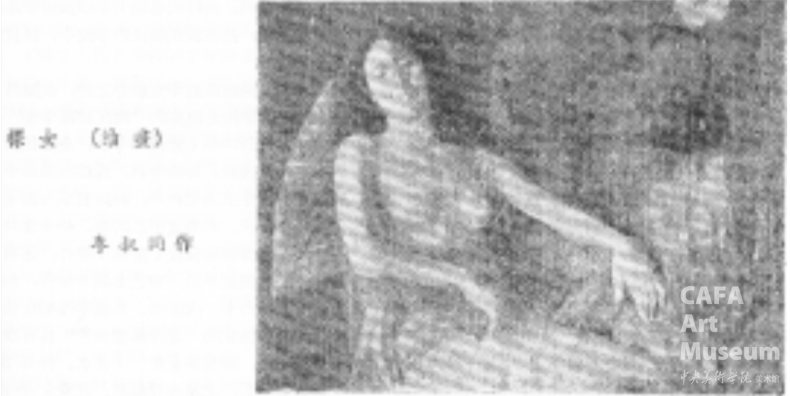
4、吴梦非在1959年撰写的《五四运动前后的美术教育回忆片段》一文,发表于中央美术学院的《美术研究》1959年第3期,文章插图便是他当年主编的《美育》第一期上李叔同的《女》那件作品。而此处使用标题为《裸女》,图像的清晰度及制版质量较《美育》上的《女》好,但也有一些模糊,黑白图像。(图7)据《美术研究》这一期的编辑奚传绩教授回忆,吴梦非的文章是他去组稿的,《裸女》图片由吴梦非提供。[9]文章中还特别提到:“李先生曾做油画‘裸女’一幅,此画现尚存于叶圣陶先生处”。[10]
1568690022895209.png

图7 发表于中央美术学院《美术研究》1959年第三期的李叔同《裸女》,该图片为吴梦非提供

5、由商金林编的《叶圣陶年谱》1959年8月30日条记载:“作书致吴作人,以弘一法师的裸体油画一帧送中央美术学院,请其保存。”[11]笔者曾致电商金林先生,询问此记载的来源、依据等,商先生称,其资料来源于叶圣陶先生日记。又,夏丏尊先生的长孙夏弘宁在《从艺术家到高僧》一文中说到:“值得庆幸的是,在三十年代,李叔同曾赠送夏丏尊一大幅油画,画的是一安静、媚美、舒适地躺卧着的浴后裸体少女。夏先生生前十分喜爱此画,长年挂着白马湖屋客堂上。夏先生逝世后,这幅油画带往北京叶圣陶先生家珍藏。近读叶老日记:1959年8月13日,叶老致书中央美术学院院长吴作人,将此画送请中央美术学院永久保存。”[12]

6、叶圣陶1982年6月23日作《刘海粟文集》序写道:“我国人对人体模特写生,大概是李叔同先生最早。他在日本的时候画过一幅极大的裸女油画,后来他出家了,赠与夏丏尊先生。中华人民共和国建国之初,夏先生的家属问我这幅油画该保存在哪儿,我就代他们送交中央美术学院。可惜后来几次询问,都回答说这幅画找不到了。”[13]

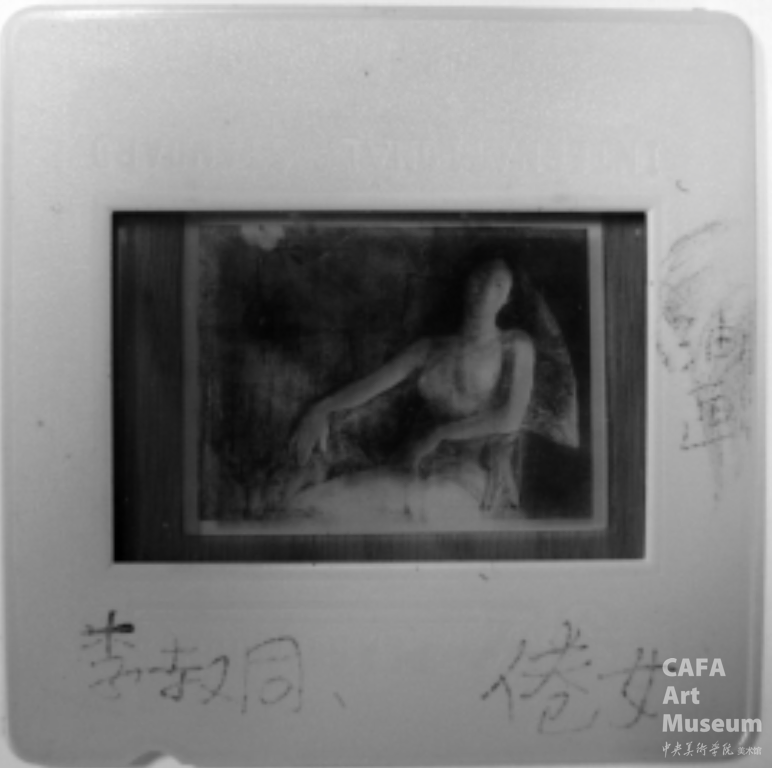
7、2012年3月27日在中央学术学院美术馆的李叔同《半裸女像》鉴定、研讨会上,中央美术学院李树声教授提供了这一作品的反转片,他回忆道:1960年至1964年间他们搜集整理“中国现代美术史”资料汇编工作时,曾与摄影人员一道到中央美院陈列馆提取这一作品,进行反转片拍摄,目前反转片片夹上写明:“李叔同倦女油画”。(图8)
1568690039974815.png

图8 李树声先生于1960年代初拍摄自中央美 院陈列馆李叔同作品反转片,片夹上写着:“李 叔同 倦女 油画”

8、从20世纪七八十年代开始,众多的中国美术史论著、传记、图典等一再提及、论述、介绍、登载了这件李叔同的代表作《半裸女像》。刊出时使用的题名有“女”、“出浴”、“浴女”、“裸女”、“坐着的裸妇”等,名称不一;创作时间也不尽相同,有“1906”、“1910年”、“1910年前”、“1911年以前”等。除转自1920年《美育》第一期登载的图像注明“上海专科师范学校藏”外,都没有注明该作品现藏何处,可能普遍认为该作品“不知在何处”。[14]

9、2011年10月间,中央美院美术馆整理民国时期藏品时,库房工作人员对存放于“外国作品”库区的藏品编号为“2011-甲”的佚名藏品,有疑问,并加以进一步查对,发现该藏品与多处发表出来的李叔同代表作《女》/《裸女》/《半裸女像》图像极为接近,经与同样由李叔同学生、著名教育家吴梦非先生经手发表于1920年《美育》杂志上图版和1959年发表于《美术研究》杂志上图版的图形比对,以及相关“流传有绪”资料的查证,确认为出自李叔同手笔的油画作品《半裸女像》。

10、我们分别于2012年3月27日和29日约请了叶圣陶先生孙子叶永和先生和夏丏尊先生的孙女夏弘福老师验看这件作品。出生于1941年,从小就与夏丏尊先生一起住在上海霞飞路寓所,看着高高挂在客厅里这件“和尚”的画长大的夏弘福老师,一眼辨认出这就是祖父家里的那件李叔同作品。“画面人物闲散的姿态和两支手臂舒展垂下的形态,印象深刻。但当年都不太敢正面凝视这一裸体的女像。”她还讲述了这一作品存放、流传的经历等,与目前相关文献的记载,颇为吻合。而比夏弘福小9岁、出生于1949年的叶圣陶先生孙子、夏丏尊先生外孙叶永和先生的回忆是,儿时在家中所见到的李叔同作品,好像是一张全裸斜卧的女人体像,裸女的脸部有些“可怕”,作品尺度比例是较窄较长的,与中央美院目前这件李叔同《半裸女像》不同。从叶永和当年尚是八、九岁的小孩,这一作品存放在叶圣陶先生家的时间也可能不是很长等因素看,叶永和先生的记忆及印象可能不及夏弘福女士的记忆更准确具体。我们正进一步联系夏家及叶家的后人,让更多人参加辨识,及对相关细节作回忆,以便更准确判断中央美术学院美术馆目前这件作品,与叶圣陶先生1959年代夏丏尊家人送给中央美术学院的李叔同的画,是否同一件作品。

以上是有关《半裸女像》作品的相关重要节点史料,通过这些史料相关细节的联系和对照,以及作品与印刷品图像的比对、电脑叠影比对等,我们初步确定《半裸女像》是李叔同先生的作品。如果将上述线索串连起来,大体可以勾勒出这件作品流传的基本线索:

李叔同《半裸女像》可能作于他在日本留学期间。据刘晓路考证,李叔同1905年抵日本,1906年考入东京美术学校,1911年毕业后归国。[15]这幅画应该作于1906-1911年之间。1920年前后,这幅画为上海专科师范学校所藏,之后又转到夏丏尊先生处,据夏丏尊先生的孙女夏弘福女士称,20年代初期夏先生在白马湖寓所客厅里就挂着此画。大约在1937年之后,此画挂在夏丏尊先生上海霞飞路寓所,[16]1950年代又由夏的家人转托叶圣陶先生,1959年8月由叶圣陶先生代夏丏尊先生后人将此画捐赠给中央美术学院。

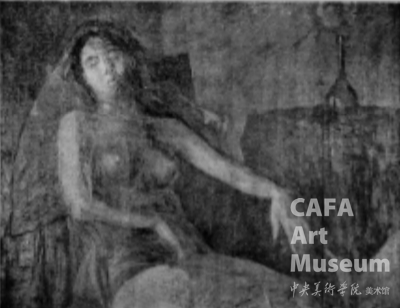
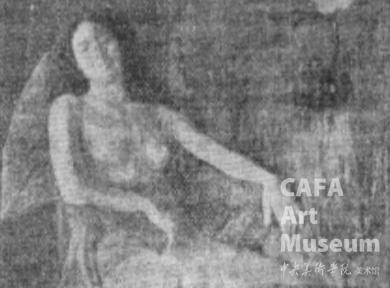
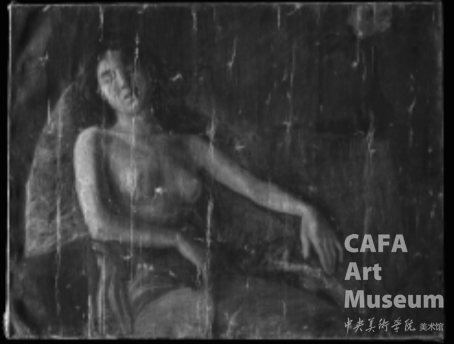
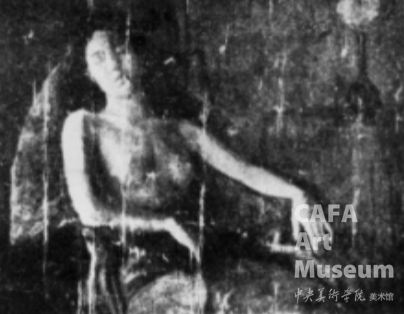
另有一种推测是,1920年发表于《美育》杂志的《女》与20年代夏丏尊先生家里的那幅裸女画是两幅画--是李叔同先生同时作的同题材、同构图的两幅画。因为两幅画的图像细节有一些小出入,究竟是早年印刷技术粗糙留下的问题、造成的错觉,还是确实是两幅画?尚有存疑。而目前中央美院美术馆发现的《半裸女像》应是后者,是1959年8月由叶圣陶先生代夏丏尊先生后人捐赠美院的夏家的画。解放后多种美术史论著、图录上李叔同这幅画的图片,拍摄的是夏家这幅画。(图9)
1568690062653609.png

1568690078881792.png

1568690085906192.png

1568690092480624.png

图9 李叔同作品,1920年图,1959年图,现 图,及现图与1920年图叠加比较图

关于我们目前发现的这幅画,与1920年《美育》杂志上发表的那件作品是否为同一幅画,我们将作进一步的科学技术鉴定及图像研究辨识等工作。


二、一些亟需厘清的环节及相关思考

在以上史料的分析和关系查证中,我们发现,这件作品在近一个世纪的流传过程中,存在一些很有意思又不甚清楚的环节,需要进一步厘清。这种追索、辨识、思考,有助于我们对这一作品展开深入研究:

1、李叔同自己说过,出家前将“凡油画、美术书籍,赠送给北京美术学校”,特别是他在那封1922年写给侄儿李圣章的信中谈及出家前分赠绘画书籍物品去处时,“音乐书赠刘子质平;一切书杂另物赠丰子子恺(二子皆在上海专科师范,是校为吾门人辈创立)”,这里还提及了“上海专科师范”,但是,却没有谈到曾有油画作品赠与“上海专科师范”或学校创办者、他的学生丰子恺、吴梦非、刘质平,尤其是这件《女》油画作品是如此大的尺寸也如此有代表性。那么,这件这么重要的作品是怎样由“上海专科师范”学校收藏?是属于三位“门人辈”创办者所共有还是其中哪位的?这在这三位“门人辈”的不少的回忆纪念老师李叔同的文章中都没有谈及这些细节。[17]

2、创办“上海专科师范学校”并任校长的吴梦非先生,在1959年撰写的《五四运动前后的美术教育回忆片段》一文中谈到:“李先生曾做油画‘裸女’一幅,此画现尚存于叶圣陶先生处”。文章的插图便是与1920年《美育》第一期上刊出的同一件李叔同作品。[18]那么,当年他在《美育》杂志上发表这一作品是明确写着“上海专科师范学校藏”,上海专科师范学校是私立学校,创办者是吴梦非、丰子恺、刘质平,这画是李叔同先赠送师范学校或吴、丰、刘三位中的一位?而后来又怎样说是在叶圣陶先生处(之前在夏丏尊先生处)?在这里,作为前后都有直接关联的吴梦非没有作进一步的说明。

3、叶圣陶1982年6月23日作《刘海粟文集》序写道:“他(李叔同)在日本的时候画过一幅极大的裸女油画,后来他出家了,赠与夏丏尊先生。中华人民共和国建国之初,夏先生的家属问我这幅油画该保存在哪儿,我就代他们送交中央美术学院。”[19]如果据叶老的这段话,又似乎没有什么疑问,这幅画是由李叔同赠送给夏丏尊先生的。但1920年发表时,怎么又标明是“上海专科师范学校藏”?之后又是怎样“赠与夏丏尊先生”的?据说这幅画很早挂在夏丏尊先生的客厅里,孙晓泉先生和刘海粟先生都曾有文谈及在夏丏尊先生家里的这幅画。[20]据夏丏尊先生孙女夏弘福女士的转述和回忆,这件《半裸女像》作品很早就挂在夏丏尊先生白马湖寓所“平屋”里,白马湖地处农村,村民们对裸体画很好奇,表示不很理解。此阶段夏丏尊先生工作于上海,来回居住往来于上海与白马湖之间,后夏丏尊搬到上海,霞飞路寓所里也一直挂着这件作品。[21]夏家的这幅画与1920年“上海师范专科学校藏”的那幅画是否为同一作品?

作为李叔同同事兼挚友的夏丏尊有过多篇谈及与弘一法师往来友谊的文章,其中很重要的《弘一法师之出家》一文里,特别谈及李叔同出家前分赠作品物品的情况,他写道:“暑假到了。他把一切书籍字画衣服等等,分赠朋友学生及校工们,我所得的是他历年所写的字,他所有的折扇及金表等。自己带到虎跑寺去的,只是些布衣及几件日常用品。”[22]这里,并没有提及李叔同出家前将这一“极大”的油画作品赠他,而后夏先生的其他文字也没有谈到李叔同赠送作品的事。那么,《女》这件作品具体是在什么时间、什么情况下、以什么方式送给夏丏尊先生的?

有一则资料值得注意,夏丏尊先生的长孙夏弘宁说到:“在三十年代,李叔同曾赠送夏丏尊一大幅油画,⋯⋯夏先生生前十分喜爱此画,长年挂着白马湖屋客堂上。夏先生逝世后,这幅油画带往北京叶圣陶先生家珍藏。近读叶老日记:1959年8月13日,叶老致书中央美术学院院长吴作人,将此画送请中央美术学院永久保存。”[23]此处提到的“三十年代”李叔同赠送夏丏尊一大幅油画,这个时间是否确切?如确切,它与1920年“上海师范专科学校藏”的那幅《女》,倒构成一种时间上的前后关系,两幅画可能为同一幅画。

4、夏丏尊与叶圣陶是亲家关系,叶圣陶的儿子叶至善与夏丏尊的女儿夏满子为伉俪。夏丏尊先生1946年去世,这一作品大概是什么时间,在什么情况下存放到叶圣陶先生处?据朱伯雄《中国近百年美术史话:浙江两级师范学堂与李叔同》文提到:“30年前,有关部门在搜集史料时,在叶圣陶先生处见到一幅裸女半身像;又在丰子恺处见到木炭素描头像一幅。⋯⋯至于为叶圣陶先生所藏(现均已交赠国家)的那幅《裸女》,则更显画家在油画上的学院式技艺水平了。”[24]另据夏丏尊先生孙女夏弘福的回忆,其堂兄夏弘宁(已于2010年去世)大概在五十年代初期,问叶圣陶先生,这一作品存放在家里怕不安全,怎么办,并他带到北京交给了叶圣陶先生,叶先生后将作品送交中央美术学院。[25]而夏弘宁自己的文章对这一过程并没有具体的记述。

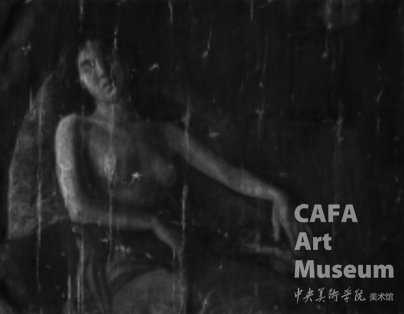
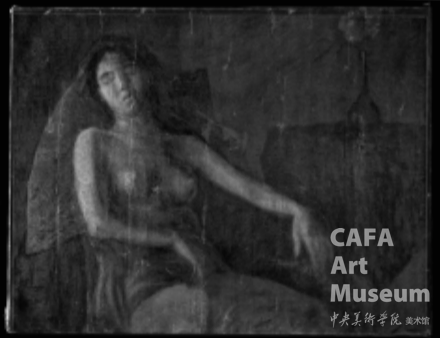
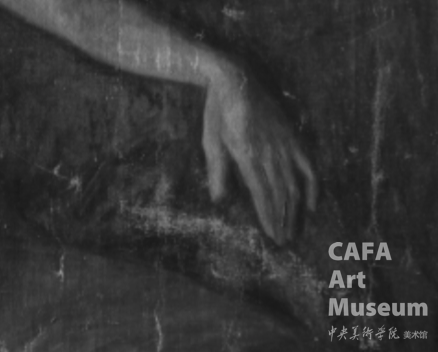
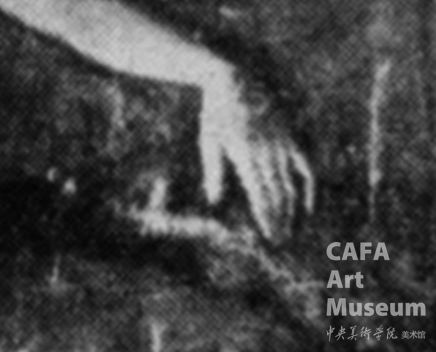
5、从图像考证的角度看,1920年《美育》杂志上的《女》出于李叔同手笔是确切无疑的,但是从流传及登载的《女》(或《裸女》等)图像看,至少存在有三个黑白图像版本:一是与1920年《美育》杂志刊登的明显有修整痕迹的图像版本(A版本)该版本图像比较硬朗,有多处轮廓线条,特别是画面左下角处有多处线条,脸部较模糊。二是画面没有卷折痕的图像版本(B版本),代表性的是吴梦非1959年《美术研究》上的图像,特点是人物形象较圆厚,画面形象也不是很清晰,(参见图9)三是有卷折痕的版本(C版本)。有卷折痕C版本的图像,画面形象与B版本较相同,人物的左手下方多了一处较亮形状物,而卷折痕处与目前保存在中央美院美术馆该作品上的卷折痕是一致的。(图10)曾有专家指出,1920年的黑白图像版本与现在中央美院的油画原作之间距离较大,似乎不是同一件作品。[26]也有台湾学者撰文提出,李叔同有一作品画两幅的特点,[27]所举的图像例子就是《女》的A版本和C版本,认为最主要的区别是C版本“人物左手按在一个像是书的东西上”。经对比现存中央美院的作品原件,发现“一个像是书的东西”,其实是画面颜料稍有剥落的痕迹。(图11)
1568690127975320.png

1568690135211761.png

图10 有卷折痕C版本图像,画面形象与B版本 较相同,人物的左手下方多了一处较亮形状物,而卷折痕处与目前保存在中央美院美术馆该作 品上的卷折痕是一致的
1568690143307712.png

1568690155819017.png

图11 经对比现存中央美院的作品原件,发现 “一个像是书的东西”,其实是画面颜料稍有 剥落的痕迹(局部对比)

有卷折痕C版本的图像,与B版本的图像比较接近,就是多了卷折痕,和人物左手下方一处较亮形状物,代表性的是郎绍君主编《中国书画鉴赏辞典》上的图版,其卷折痕处与目前保存在中央美院美术馆作品上的卷折痕相一致,[28](参见图9)

那么,这里有两个问题,一是社会上流传的B版本图像主要来自哪里?这一版本大概是什么时间拍摄的?中央美术学院李树声教授有这一作品反转片,他说是在1960年至1964年间搜集整理“中国现代美术史”资料汇编工作时,与摄影人员一道到中央美院陈列馆提取这一作品拍摄的,这一图像卷折痕不明显,接近于B版本图像。那么,C版本图像拍摄应该在B版本之后的20世纪60年代末70年代,甚至可能是“文革”后,据C版本的使用者郎绍君先生说,他所使用的李叔同《裸女》作品的图片(有卷折痕的C版本)是由出版社提供的。这样,从李树声教授的回忆及拍摄的B版本,到直接源自中央美院现藏李叔同作品的C版本,都较明确知道该作品的藏处是在中央美院,为何出版时都没注明收藏处?而作为收藏处的中央美院陈列馆,却长期认为这一作品是“佚名”的外国作品。作品拍摄时,应该是由中央美院陈列馆提供并有相关人员参与完成的,怎么可能长期存在“不知在何处”和“佚名外国作品”的误会呢?这其中的原因是什么?

6、是否存在两幅李叔同同一构图的《裸女》作品?1920年《美育》杂志刊登的《女》作品图像,画面人物及物象形体等显得比较方正和硬朗,有多处轮廓线条,特别是画面左下角处有多处线条,脸部较模糊,而1959年发表于《美术研究》上的《裸女》图像,和目前收藏于中央美院的《半裸女像》作品,人物形象都较为圆厚,画面左下角没有线条状物象,脸部特别嘴唇比较清晰。在2012年3月27日下午的专家鉴定及研讨会上,刘曦林先生、钟涵先生等专家提出了《半裸女像》与1920年《美育》上的《女》可能不是同一作品的观点。台湾学者李璧苑曾指出:“就同一题材来看,或许李叔同有時候有重复画两张的习惯,如照片(陈师曾与子封雄)中的盆栽油画与油画《花卉》;油画《女》与《出浴》;以及两幅同名为《朝》的作品等,均是构图相同之作。”[29]在该文的插图中,《女》为1920年《美育》版的图像,而《出浴》是介于上述所提到的B版本与C版本之间的图像,即画面人物形象较为圆厚,没有卷折痕,但人物的左手下方有一处较亮形状物。该图像出自《弘一大师全集》第七册《佛学卷(七)、传记卷、序跋卷、附录卷》,李璧苑在插图说明上写着:“以上两画的构图相同,但下一幅的人物左手按在一个像是书的东西上。”[30]李叔同作画是否有重复画两张的习惯,有待进一步考索,但是,就李璧苑所举的这一例证来看,经与现存于中央美院的作品原件对比,明显的,“一个像是书的东西”,其实是画面颜料稍有剥落的痕迹。

至于中央美院的《半裸女像》是否与1920年《美育》版的《女》是同一作品还是两张画,需要用科学技术手段作颜料、材质、年代检验、图形定点比对、轮廓线比对等工作。1920年的《美育》版本,当年登载的杂志开本较小,约高22公分,宽15公分,图版也不大,20世纪初期中国的拍摄和制版、印刷质量都处于较低水平,同时,当时出版方的“中华美育会”或“上海专科师范学校”是几位同人出资筹办的机构,经济窘迫,处于运作艰难的草创期。因此,图片制版及印刷质量较差,有较明显的修版痕迹,这是不争的事实。那么,以这样黑白的、小开度而后放大的、有可能被修版过的图像来进行图像比较,可能会有图像之外的误差及其造成的错觉,这也是我们在比对过程中要考虑到的问题。

有意思的在于,1920年的《美育》版图像(A版本)出自于吴梦非主持的《美育》,1959年出现在《美术研究》上的图像B版本也来自于吴梦非,那么,一般情况下,这两个图像版本及所指向的应该是李叔同的同一件作品,更何况,1920年这件李叔同的作品就在吴梦非、丰子恺、刘质平三人手里,为“上海专科师范学校”所有。而1959年的B版本直接标明《裸女》,“此画现尚存于叶圣陶先生处”,“此画”即现在藏于中央美院的李叔同这一件作品。

7、李叔同的《半裸女像》具体的创作时间,目前一些印刷物标着“1906”、“1910年”、“1910年前”等,[31]但是郭长海、郭君兮编《李叔同集》,年表中1909年条:“本年,作油画《浴女》、《朝》。”[32]此《浴女》应该就是这件《半裸女像》,那么,这件作品的创作年代是否可以定为1909年?而这件作品创作于李叔同日本留学时期,这似乎没有什么异议。

8、在李叔同出家后的1921年,上海的“第四届天马会画展”(1921,8,4-8,10举行),展出有李叔同、李毅士、吴梦非、刘海粟等人作品。[33]天马会是在1919年10月由刘海粟等人发起成立,刘海粟对李叔同非常敬佩,这是李叔同出家后参加的少有的艺术展览活动之一,而且这次参展的据推测应该是油画。那么,这次展出的是哪些或哪一件油画作品?吴梦非也参加了这次展览会,又是在上海,上海专科师范学校此时也很活跃,那么,有否可能参展的作品其中就有这件与吴梦非和“上海专科师范学校”有关系的李叔同《女》(《半裸女像》)作品呢?

以上的存疑,驱使我们去作进一步厘清的工作。一件作品的流传背后,其实包含着一个时代、以及置身于时代中的人对美术作品、对历史的看法及其处理方式,其涉及和引发的与中国现代美术史相关的问题,值得深入思考。


三、关于李叔同寄赠北京美术学校作品一事的思考

李叔同在1918年出家之前,将他大部分的油画作品寄赠北京美术学校,这批作品上世纪二三十年代就传出不见了。这次,我们发现李叔同《半裸女像》时,开始以为与李叔同的这批“寄赠”作品有关,但是后来经查证,发现不是同一回事。当年“寄赠”作品的离奇失踪,这其中存在着诸多语焉不详之处,值得深究。这里列举几处,我们希望通过这次李叔同这件作品的重见天日,引发我们对李叔同其他存世作品的关注和保护,特别是与中央美术学院前身北京美术学校有关的这批作品,我们将会加以持续的追踪,期待有一天,这批作品能重新浮出水面。现将与这批寄赠北京美术学校的作品相关的文献,引录如下:

1、吴梦非1936年撰写的《弘一法师与浙江的艺术教育》说到:弘一的艺术,不论绘画、书法、诗词、乐曲、篆刻等,无一不精,他的平时作品中,最伟大的要算油画,在出家前,曾拣取得意的几幅,专送国立北京美术专门学校保管,(据弘一师说,“其中也有我的油画”。)预想总可以垂诸永久了。不料日前我在上海,和夏丏尊先生谈起,他说:“我想把弘一师的油画,出品于浙江文献展览会,岂知向北平艺专(即前北京美专)调查之下,竟不知去向了。可惜!可惜!”国立的机关,尚如此不可靠,真可为我国文化前途忧![34]

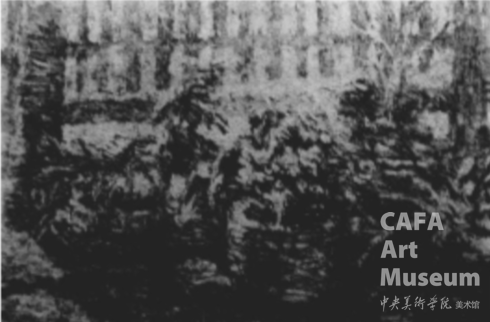
2、秦启明编注《弘一大师李叔同书信集》中谈到:1918年夏,李叔同在杭州出家时,曾见历年所绘油画全部寄赠北京美术学校,怎奈该校既未收藏又未陈列,结果全部失散。1940年欧洲举办美术展览会,阅读诗人泰戈尔邀请李叔同选送油画参展,结果几经周折竟找不到一幅。李叔同只能付之长叹:“一切的一切都老早丢光了!”因此之故,李叔同存世的作品很少。目前所知仅有这样几幅(原件或影印件):····(六)花卉:油画,作于东京美术学校。为目前仅存的李叔同油画遗作,原件存储小石(原北京美校教授)处,曾刊陈慧剑散文集《孽海花魂》首页。(图12)⋯⋯[35]
1568690263954408.png

图12 李叔同油画《花卉》,曾藏台湾储小石处

3、柯文辉著《旷世凡夫:弘一大传》:1918年叔同将全部油画素描水彩赠给了北平美术专科学校。校长郑锦是叔同后学,曾师事梁启超,习日本画,笔法琐碎,格局小而考据欠精,对画坛高手姚茫父、陈师曾、王梦白、吴法鼎皆不理解,更谈不上重视。叔同的油画放在校园的雪地上,经一冬雨雪毁掉,仅教师储小石从画堆里抽得花卉一张,另一说法是被盗,有一张掉在校园为储拾得。回家保存,现在台北。陈慧剑先生曾将此画印入台湾版散文集《孽海花魂》。[36]

4、据张铁成编著的《听李叔同讲人生哲理》:1918年他出家为僧,曾将手头全部油画20幅寄到北平国立美术专科学校保存。1923年冬,李叔同的学生刘质平到北平考察艺术教育,探询老师油画所在,竟一帧无存,据传已被转卖。又据该校教授储小石先生所述,当年他在雪地中捡到一幅题为《花卉》的油画,认出是李叔同手笔,后来此画转到新加坡广洽法师处,这是迄今为止李叔同油画作品在世间唯一能见到的一幅,至于其他19幅,至今不知所终。[37]

5、吴可为著的《古道长亭:李叔同传》中提到:李叔同出家之前曾将身边的绝大部分画作赠给了北平国立艺术专科学校(陈师曾当时在该校任教),谁知这些作品根本没有得到妥善的保管。据台北工业专科学校储小石教授回忆,民国二十年前后他在该校任教期间,曾有窃贼于一雪夜偷走了校藏库内一批藏品,其中大部分便是李叔同的作品,他还有幸在第二天清晨,拾到了窃贼匆忙间遗落的一件李叔同的油画,就是我们前面提到过的那幅《花卉》。(陈慧剑《弘一大师论》台北东大图书公司1996年版)这一说法也得到另一资料的佐证。李叔同的学生吴梦非在一篇文章中提到,李叔同“平时作品中最伟大的要数油画”,1936年,李叔同出家之后,他的同事和密友夏丏尊曾想将他的油画拿到浙江文艺展览会上展出,岂知与北平艺专联系时却发现那批画竟已不知去向了。(吴梦非《弘一法师与浙江的艺术教育》,见《弘一大师全集》第10册,福建人民出版社1991-1993年第一版)[38]

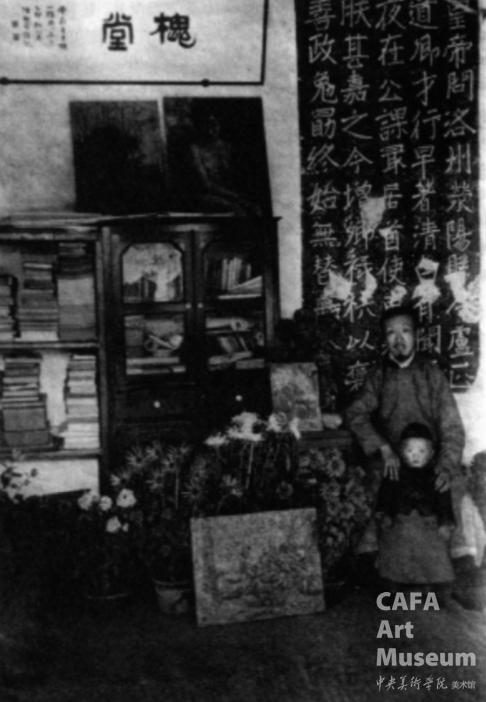
李璧苑《槐堂油画为李叔同所作考──从陈师曾与子封雄的合影(1919)谈起》中的论述:他出家以前,将生平所作油画,赠与北京美术学校,笔砚碑帖赠与书家周承德,书画临摹法书赠与夏丏尊和堵申甫,衣服书籍等赠与丰子恺、刘质平等,玩好小品赠给了陈师曾,当时陈还为他这次割爱画了一张画。⋯⋯但从陈师曾携子与油画合影的照片判断,李叔同的油画作品应是部分赠与北京美术学校,部分赠与陈师曾的。⋯⋯其实李叔同赠与北京美术学校的油画,除了根据储小石的说法之外,在门生刘质平1923年冬访察该校时,就不见踪迹了。而陈师曾于是年八月逝世,故有可能陈师曾家中的油画在其逝后,被人分走或清走了。然是否储小石从雪地上捡起的油画《花卉》,就是在这个时间点上呢?为何储小石收藏的《花卉》与陈师曾家中的盆栽油畫,相似度那么高?还是李叔同当初画了两幅呢?则有待进一步的研究。但无论如何,陈师曾、封雄与油画合影的照片是绝对珍贵的史料。[39](图13)
1568690284527984.png

图13 陈师曾与子封雄合影照片(1919年),照 片中有油画4幅,可能为李叔同所作。其中一幅 与台湾储小石曾藏的李叔同《花卉》很接近

关于李叔同作品寄赠北京美术学校而后失踪的记载,还不只上述这些。不过,互相转引的情况较多,其说法、时间或大同小异,或语焉不详。我们觉得比较可靠的,还是吴梦非先生的说法、夏丏尊先生的记载等。此外,像“1923年冬刘质平到北平考察艺术教育”、“1936年浙江文献展览会”、(一说“浙江文艺展览会”)“1940年欧洲举办美术展览会”,“诗人泰戈尔邀请李叔同选送油画参展”,“新加坡广洽法师处”,“1919年陈师曾家中的油画”等多条资料线索,也可以为我们进一步的追寻和研究提供路径。

以上是我们近期因发现李叔同的《半裸女像》而作的一点查证、研究及思考,以此请教于各位同行专家学者!也期待与大家一道,对李叔同作品及相关的艺术问题作深入的挖掘和研究,希望有更多的李叔同绘画作品重见天日,让更多的人有幸亲炙创作于清末民初、中国现代油画一代宗师李叔同的油画原作,从中获得启迪和熏陶,也为深入研究李叔同艺术奠定更深厚的实物基础。


注:

[1]后来因澳门方资金问题,该展览暂没有成行。

[2]此手工账本据原中央美术学院陈列馆王晓副馆长(1900-2004年主持陈列馆工作)说,他到任时,此手工帐本就存在,但可能是文革后整理的。

[3]此数据库电子账本为2008年下半年根据实物清点时所登记。

[4]李叔同《半裸女像》(油画)部分刊登情况(按发表年份排序)

1.1920年《女》(油画)上海师范专科学校藏)李叔同先生笔(《美育》第一期,中华美育会1920年4月20日发行)

2.1959年《裸女》(油画)李叔同作(吴梦非《五四运动前后的美术教育回忆片段》,中央美术学院《,美术研究》1959年第3期,第42页)

3.1988年《女裸》李叔同(1910年)(陶咏白编《中国油画1700-1985》,江苏美术出版社,1988年第1版,第3页)

4.1991年出浴(油画)一九○六年作于日本东京(《弘一大师全集》编辑委员会编《弘一大师全集7·佛学卷7》,福建人民出版社,1991年版第679页)

5.1994年裸女李叔同(郎绍君等主编《中国书画鉴赏辞典》(豪华本),中国青年出版社,1994年版第647页)

6.2000年近现代李叔同裸女(王伯敏著《中国绘画通史下册》,三联书店出版,2000年版第474页)

7.2001年李叔同坐着的裸妇1910年前(苏林编著.《20世纪中国油画图库1900-1949》,广西美术出版社,2001年版第8页)

8、2002年李叔同《裸女》,李氏在日本学画时完成(潘耀昌编著《中国近现代美术教育史》,中国美术学院出版社,2002版第19页)

9.2007年《女》(油画上海师范专科学校藏)李叔同先生笔《美育》第一期,中华美育会1920年4月20日发行(李超著《中国现代油画史》,上海书画出版社,2007年版第24页)

10.2008年李叔同油画《裸女》(陈星著《李叔同出家实证.》杭州出版社,2008年版第161页)

11.2010年李叔同在日本学习绘画时所作裸女画(柯文辉编著《旷世凡夫:弘一大传》北京大学出版社,2010年版第71页)

[5]《美育》第一期,中华美育会1920年4月20日发行,第2页。

[6]秦启明编注《弘一大师李叔同书信集》,陕西人民出版社1991年版198页。

[7]上海专科师范学校,1919年秋,吴梦非、刘质平、丰子恺在上海筹办,私立性质,并于1920年正式成立,校址在小西门黄家阙路。由吴梦非任校长,丰子恺任教务主任。该校办学目的是培养中、小学美术师资。其学制仿照德国,分普通师范、高等师范两部,以图画、手工、音乐为主科。教材以日本正则洋画讲义为主要参考教材,崇尚写实画风。吴梦非、刘质平,丰子恺三人都是当时浙江省立第一师范学校教师李叔同的学生,吴精手工,刘专音乐,丰长绘画,三人通力合作,各自发挥自己的特长。该校虽然仅开办了7年,却培养了美术师资近800人,是中国一所具有很大影响力的美术师范学校。50年代吴梦非在接受音乐史界的专访时回忆说:“当时我们班的上海专科师范,经常发生经费困难,李叔同知道这个情况,就写了很多字画给我们,叫我们把卖掉字画所得的钱,补贴学校经费不足之用。”(戴鹏海、郑碧英《访问吴梦非的记录》1959年9月,见张延辉《李叔同的艺术教育思想》,《甘肃联合大学学报》2010年第3期)当年吴梦非在《民国日报》上刊登启事:“李叔同先生的书法,海内闻名。顾自出家以来,罕能得其墨迹。去岁敝校筹募资金,弘一师特破例书赠琴条三十幅,俾作慷慨捐助者之酬赠。”可见,李叔同与上海专科师范学校关系之密切。

[8]见李超著《中国现代油画史》,上海书画出版社2007年版,第24页。


[9]笔者2012年3月28日电话询问居住在南京艺术学院的奚传绩教授,了解到这一情况。之后,经奚教授建议,笔者又电话咨询当期的发稿
编辑李松涛教授,其说法一致。


[10]《美术研究》1959年第3期,第41页,中央美术学院出版。

[11]商金林编《叶圣陶年谱》,江苏教育出版社,1986年版第
433页。


[12]《宁波佛教》1995年第1期。


[13]《叶圣陶散文乙集》,北京三联
书店,1984年版第606页。


[14]参见[4]。


[15]刘晓路《档案中的青春像:李叔同与东京美术学校(1906-1918)》,《美术家通信》1997年第12期。


[16]2012年3月22日笔者采访夏丏尊先生孙女夏弘福老师。


[17]弘一法师的另一位学生李鸿梁曾谈过他得到李叔同一件早期油画:他这样说:“这批画后来等法师将要出家时,都赠送给北京国立美术学校了。我得了一张十五号的画,画的是以大海为背景的一个扶杖老人,意态有点像米勒的《晚祷》,不过色彩比较淡静,调子也比较柔和,这是法师在日本东京美术学校里的第一张油画习作。这张画,后来在抗日战争时期与其他书画文物,全数被绍兴城区35号主任汉奸胡耀抠抢去了”(见陈星编《我看弘一法师》,浙江古籍出版社,
2003年版,第83页)。

[18]《美术研究》1959年第3期,第41页,中央美术学院出版。


[19]《叶圣陶散文乙集》,北京三联书店,1984年,第606页。

[20]孙晓泉《李叔同与西泠印社》中写道:“夏丏尊客堂中,曾悬挂大幅油画一帧,面积约十七八尺,画一浴后之日本少女,斜侧椅上,肩上两手傍,有轻纱遮蔽,长发披于两颊,两目如将入睡,背景置瓶花一束,作为点缀,色调柔美,用笔生动,女性之美流露画面。读画的人但觉海棠笼雾,丽质天然。此画曾陈列上海天马会画展,深得各界好评,可作李氏代表作。”(原刊于1979年《新观察》,收录入《弘一法师全集》第10册附录卷,福建人民出版社,1993年,第141页)刘海粟1983年游青岛,访湛山寺,后写《湛山寺话弘一》一文,文中谈到:“我在夏丏尊先生家看过他(李叔同)的女性胸像和一些小品。女像沉静清秀,左边眉毛微微扬起,双目略带下视,如有所思,人中下巴立体感突出,肌肉坚实而富有弹性,饱含着青春气息。头发画得很奔放,技巧娴熟,功力深厚。(刘海粟著《齐鲁谈艺录》山东美术出版社1985年)

[21]同[16]。

[22]夏丏尊《弘一法师之出家》,见《夏丏尊教育名篇》,教育科学出版社,2007年版,第216页。

[23]
同[12]

[24]《美术向导》编辑部编《美术向导》第12册,朝花美术出版社,1988.年版第44页。

[25]同[16]。

[26]2012年3月27日“李叔同油画《半裸女像》鉴定及研讨会”上刘曦林研究员、钟涵教授的意见。

[27]李璧苑《槐堂油画为李叔同所作考──从陈师曾与子封雄的合影(1919)谈起》,文载《永恒的风景──第二届弘一大师研究国际学术会议论文集》,中国文化艺术出版社,2008年。

[28]郎绍君等主编《中国书画鉴赏辞典》,中国青年出版社,1994年版,第647页。

[29]
同[27]。


[30]
《弘一大师全集》第七册《佛学卷(七)、传记卷、序跋卷、附录卷》福建人民出版社,1991年版,第679页。

[31]参见[4]。

[32]郭长海、郭君兮编《李叔同集》,天津人民出版社,2006年版,第263页。

[33]刘海粟美术馆编《艺术宣言:忆民国洋画界》,上海人民美术出版社,2008年版第41页。

[34]刊于1936年《浙江青年》第三卷第一期,转引自《弘一大师全集》编辑委员会编《弘一大师全集》第10册,附录卷,福建人民出版1993年版,第33页。

[35]秦启明编注《弘一大师李叔同书信集》,陕西人民出版社,1991年版478页。

[36]柯文辉著《旷世凡夫:弘一大传》北京大学出版社,2010年版第66页。

[37]张铁成编著《听李叔同讲人生哲理》,新世界出版社,2009年版第292页。

[38]此段引自吴可为著《古道长亭:李叔同传》,杭州出版社,2004年版,第133页。

[1]同[27]


作者|王璜生 李垚辰

原文发表于《美术研究》2012年02期。

编辑|郑丽君
Child Public Education Reservation Form

I agree to the Group Visit Agreement and Statement Please agree to the Group Visit Agreement.
Submit

Adult Public Education Event Reservation Form

I agree to the Group Visit Agreement and Statement Please agree to the Group Visit Agreement.
Sumbit

Group Public Education Event Reservation Form

I agree to the Group Visit Agreement and Statement Please agree to the Group Visit Agreement.
Submit

Group Visit Agreement
and Statement

CAFA Art Museum Publication Authorization Agreement

I fully agree to CAFA Art Museum (CAFAM) submitting to CAFA for publication the images, pictures, texts, writings, and event products (such as works created during participation in workshops) related to me from my participation in public events (including museum member events) organized by the CAFA Art Museum Public Education Department. CAFA can publish these materials by electronic, web, or other digital means, and I hereby agree to be included in the China Knowledge Resource Bank, the CAFA Database, the CAFA Art Museum Database, and related data, documentation, and filing institutions and platforms. Regarding their use in CAFA and dissemination on the internet, I agree to make use of these rights according to the stated Rules.

CAFA Art Museum Event Safety Disclaimer

Article I

This event was organized on the principles of fairness, impartiality, and voluntary participation and withdrawal. Participants undertake all risk and liability for themselves. All events have risks, and participants must be aware of the risks related to their chosen event.

Article II

Event participants must abide by the laws and regulations of the People’s Republic of China, as well as moral and ethical norms. All participants must demonstrate good character, respect for others, friendship, and a willingness to help others.

Article III

Event participants should be adults (people 18 years or older with full civil legal capacity). Underage persons must be accompanied by an adult.

Article IV

Event participants undertake all liability for their personal safety during the event, and event participants are encouraged to purchase personal safety insurance. Should an accident occur during an event, persons not involved in the accident and the museum do not undertake any liability for the accident, but both have the obligation to provide assistance. Event participants should actively organize and implement rescue efforts, but do not undertake any legal or economic liability for the accident itself. The museum does not undertake civil or joint liability for the personal safety of event participants.

Article V

During the event, event participants should respect the order of the museum event and ensure the safety of the museum site, the artworks in displays, exhibitions, and collections, and the derived products. If an event causes any degree of loss or damage to the museum site, space, artworks, or derived products due to an individual, persons not involved in the accident and the museum do not undertake any liability for losses. The event participant must negotiate and provide compensation according to the relevant legal statutes and museum rules. The museum may sue for legal and financial liability.

Article VI

Event participants will participate in the event under the guidance of museum staff and event leaders or instructors and must correctly use the painting tools, materials, equipment, and/or facilities provided for the event. If a participant causes injury or harm to him/herself or others while using the painting tools, materials, equipment, and/or facilities, or causes the damage or destruction of the tools, materials, equipment, and/or facilities, the event participant must undertake all related liability and provide compensation for the financial losses. Persons not involved in the accident and the museum do not undertake any liability for personal accidents.

CAFA Art Museum Portraiture Rights Licensing Agreement

According to The Advertising Law of the People’s Republic of China, The General Principles of the Civil Law of the People’s Republic of China, and The Provisional Opinions of the Supreme People’s Court on Some Issues Related to the Full Implementation of the General Principles of the Civil Law of the People’s Republic of China, and upon friendly negotiation, Party A and Party B have arrived at the following agreement regarding the use of works bearing Party A’s image in order to clarify the rights and obligations of the portrait licenser (Party A) and the user (Party B):

I. General Provisions

(1) Party A is the portraiture rights holder in this agreement. Party A voluntarily licenses its portraiture rights to Party B for the purposes stipulated in this agreement and permitted by law.

(2) Party B (CAFA Art Museum) is a specialized, international modern art museum. CAFA Art Museum keeps pace with the times, and works to create an open, free, and academic space and atmosphere for positive interaction with groups, corporations, institutions, artists, and visitors. With CAFA’s academic research as a foundation, the museum plans multi-disciplinary exhibitions, conferences, and public education events with participants from around the world, providing a platform for exchange, learning, and exhibition for CAFA’s students and instructors, artists from around the world, and the general public. As a public institution, the primary purposes of CAFA Art Museum’s public education events are academic and beneficial to society.

(3) Party B will photograph all CAFA Public Education Department events for Party A.

II. Content, Forms of Use, and Geographical Scope of Use

(1) Content. The content of images taken by Party B bearing Party A’s likeness include: ① CAFA Art Museum ② CAFA campus ③ All events planned or executed by the CAFAM Public Education Department.

(2) Forms of Use. For use in CAFA’s publications, products with CDs, and promotional materials.

(3) Geographical Scope of Use

The applicable geographic scope is global.

The media in which the portraiture may be used encompasses any media that does not infringe upon Party A’s portraiture rights (e.g., magazines and the internet).

III. Term of Portraiture Rights Use

Use in perpetuity.

IV. Licensing Fees

The fees for images bearing Party A’s likeness will be undertaken by Party B.

After completion, Party B does not need to pay any fees to Party A for images bearing Party A’s likeness.

Additional Terms

(1) All matters not discussed in this agreement shall be resolved through friendly negotiation between both parties. Both parties may then sign a supplementary agreement, provided it does not violate any laws or regulations.

(2) This agreement comes into effect on the date that it is signed (sealed) and the relevant boxes are selected by Party A and Party B.

(3) This agreement exists in paper and electronic forms. The paper form is made in duplicate, with Party A and Party B each retaining one copy with the same legal efficacy.

Event participants implicitly accept and undertake all the obligations stated in this agreement. Those who do not consent will be seen as abandoning the right to participate in this event. Before participating in this event, please speak to your family members to obtain their consent and inform them of this disclaimer. After participants sign/check the required box, participants and their families will be seen as having read and agreed to these terms.

I have carefully read and agree to the above provisions.

Group Visit Agreement
and Statement

CAFA Art Museum Publication Authorization Agreement

I fully agree to CAFA Art Museum (CAFAM) submitting to CAFA for publication the images, pictures, texts, writings, and event products (such as works created during participation in workshops) related to me from my participation in public events (including museum member events) organized by the CAFA Art Museum Public Education Department. CAFA can publish these materials by electronic, web, or other digital means, and I hereby agree to be included in the China Knowledge Resource Bank, the CAFA Database, the CAFA Art Museum Database, and related data, documentation, and filing institutions and platforms. Regarding their use in CAFA and dissemination on the internet, I agree to make use of these rights according to the stated Rules.

CAFA Art Museum Event Safety Disclaimer

Article I

This event was organized on the principles of fairness, impartiality, and voluntary participation and withdrawal. Participants undertake all risk and liability for themselves. All events have risks, and participants must be aware of the risks related to their chosen event.

Article II

Event participants must abide by the laws and regulations of the People’s Republic of China, as well as moral and ethical norms. All participants must demonstrate good character, respect for others, friendship, and a willingness to help others.

Article III

Event participants should be adults (people 18 years or older with full civil legal capacity). Underage persons must be accompanied by an adult.

Article IV

Event participants undertake all liability for their personal safety during the event, and event participants are encouraged to purchase personal safety insurance. Should an accident occur during an event, persons not involved in the accident and the museum do not undertake any liability for the accident, but both have the obligation to provide assistance. Event participants should actively organize and implement rescue efforts, but do not undertake any legal or economic liability for the accident itself. The museum does not undertake civil or joint liability for the personal safety of event participants.

Article V

During the event, event participants should respect the order of the museum event and ensure the safety of the museum site, the artworks in displays, exhibitions, and collections, and the derived products. If an event causes any degree of loss or damage to the museum site, space, artworks, or derived products due to an individual, persons not involved in the accident and the museum do not undertake any liability for losses. The event participant must negotiate and provide compensation according to the relevant legal statutes and museum rules. The museum may sue for legal and financial liability.

Article VI

Event participants will participate in the event under the guidance of museum staff and event leaders or instructors and must correctly use the painting tools, materials, equipment, and/or facilities provided for the event. If a participant causes injury or harm to him/herself or others while using the painting tools, materials, equipment, and/or facilities, or causes the damage or destruction of the tools, materials, equipment, and/or facilities, the event participant must undertake all related liability and provide compensation for the financial losses. Persons not involved in the accident and the museum do not undertake any liability for personal accidents.

CAFA Art Museum Portraiture Rights Licensing Agreement

According to The Advertising Law of the People’s Republic of China, The General Principles of the Civil Law of the People’s Republic of China, and The Provisional Opinions of the Supreme People’s Court on Some Issues Related to the Full Implementation of the General Principles of the Civil Law of the People’s Republic of China, and upon friendly negotiation, Party A and Party B have arrived at the following agreement regarding the use of works bearing Party A’s image in order to clarify the rights and obligations of the portrait licenser (Party A) and the user (Party B):

I. General Provisions

(1) Party A is the portraiture rights holder in this agreement. Party A voluntarily licenses its portraiture rights to Party B for the purposes stipulated in this agreement and permitted by law.

(2) Party B (CAFA Art Museum) is a specialized, international modern art museum. CAFA Art Museum keeps pace with the times, and works to create an open, free, and academic space and atmosphere for positive interaction with groups, corporations, institutions, artists, and visitors. With CAFA’s academic research as a foundation, the museum plans multi-disciplinary exhibitions, conferences, and public education events with participants from around the world, providing a platform for exchange, learning, and exhibition for CAFA’s students and instructors, artists from around the world, and the general public. As a public institution, the primary purposes of CAFA Art Museum’s public education events are academic and beneficial to society.

(3) Party B will photograph all CAFA Public Education Department events for Party A.

II. Content, Forms of Use, and Geographical Scope of Use

(1) Content. The content of images taken by Party B bearing Party A’s likeness include: ① CAFA Art Museum ② CAFA campus ③ All events planned or executed by the CAFAM Public Education Department.

(2) Forms of Use. For use in CAFA’s publications, products with CDs, and promotional materials.

(3) Geographical Scope of Use

The applicable geographic scope is global.

The media in which the portraiture may be used encompasses any media that does not infringe upon Party A’s portraiture rights (e.g., magazines and the internet).

III. Term of Portraiture Rights Use

Use in perpetuity.

IV. Licensing Fees

The fees for images bearing Party A’s likeness will be undertaken by Party B.

After completion, Party B does not need to pay any fees to Party A for images bearing Party A’s likeness.

Additional Terms

(1) All matters not discussed in this agreement shall be resolved through friendly negotiation between both parties. Both parties may then sign a supplementary agreement, provided it does not violate any laws or regulations.

(2) This agreement comes into effect on the date that it is signed (sealed) and the relevant boxes are selected by Party A and Party B.

(3) This agreement exists in paper and electronic forms. The paper form is made in duplicate, with Party A and Party B each retaining one copy with the same legal efficacy.

Event participants implicitly accept and undertake all the obligations stated in this agreement. Those who do not consent will be seen as abandoning the right to participate in this event. Before participating in this event, please speak to your family members to obtain their consent and inform them of this disclaimer. After participants sign/check the required box, participants and their families will be seen as having read and agreed to these terms.

I have carefully read and agree to the above provisions.

Group Visit Agreement
and Statement

CAFA Art Museum Publication Authorization Agreement

I fully agree to CAFA Art Museum (CAFAM) submitting to CAFA for publication the images, pictures, texts, writings, and event products (such as works created during participation in workshops) related to me from my participation in public events (including museum member events) organized by the CAFA Art Museum Public Education Department. CAFA can publish these materials by electronic, web, or other digital means, and I hereby agree to be included in the China Knowledge Resource Bank, the CAFA Database, the CAFA Art Museum Database, and related data, documentation, and filing institutions and platforms. Regarding their use in CAFA and dissemination on the internet, I agree to make use of these rights according to the stated Rules.

CAFA Art Museum Event Safety Disclaimer

Article I

This event was organized on the principles of fairness, impartiality, and voluntary participation and withdrawal. Participants undertake all risk and liability for themselves. All events have risks, and participants must be aware of the risks related to their chosen event.

Article II

Event participants must abide by the laws and regulations of the People’s Republic of China, as well as moral and ethical norms. All participants must demonstrate good character, respect for others, friendship, and a willingness to help others.

Article III

Event participants should be adults (people 18 years or older with full civil legal capacity). Underage persons must be accompanied by an adult.

Article IV

Event participants undertake all liability for their personal safety during the event, and event participants are encouraged to purchase personal safety insurance. Should an accident occur during an event, persons not involved in the accident and the museum do not undertake any liability for the accident, but both have the obligation to provide assistance. Event participants should actively organize and implement rescue efforts, but do not undertake any legal or economic liability for the accident itself. The museum does not undertake civil or joint liability for the personal safety of event participants.

Article V

During the event, event participants should respect the order of the museum event and ensure the safety of the museum site, the artworks in displays, exhibitions, and collections, and the derived products. If an event causes any degree of loss or damage to the museum site, space, artworks, or derived products due to an individual, persons not involved in the accident and the museum do not undertake any liability for losses. The event participant must negotiate and provide compensation according to the relevant legal statutes and museum rules. The museum may sue for legal and financial liability.

Article VI

Event participants will participate in the event under the guidance of museum staff and event leaders or instructors and must correctly use the painting tools, materials, equipment, and/or facilities provided for the event. If a participant causes injury or harm to him/herself or others while using the painting tools, materials, equipment, and/or facilities, or causes the damage or destruction of the tools, materials, equipment, and/or facilities, the event participant must undertake all related liability and provide compensation for the financial losses. Persons not involved in the accident and the museum do not undertake any liability for personal accidents.

CAFA Art Museum Portraiture Rights Licensing Agreement

According to The Advertising Law of the People’s Republic of China, The General Principles of the Civil Law of the People’s Republic of China, and The Provisional Opinions of the Supreme People’s Court on Some Issues Related to the Full Implementation of the General Principles of the Civil Law of the People’s Republic of China, and upon friendly negotiation, Party A and Party B have arrived at the following agreement regarding the use of works bearing Party A’s image in order to clarify the rights and obligations of the portrait licenser (Party A) and the user (Party B):

I. General Provisions

(1) Party A is the portraiture rights holder in this agreement. Party A voluntarily licenses its portraiture rights to Party B for the purposes stipulated in this agreement and permitted by law.

(2) Party B (CAFA Art Museum) is a specialized, international modern art museum. CAFA Art Museum keeps pace with the times, and works to create an open, free, and academic space and atmosphere for positive interaction with groups, corporations, institutions, artists, and visitors. With CAFA’s academic research as a foundation, the museum plans multi-disciplinary exhibitions, conferences, and public education events with participants from around the world, providing a platform for exchange, learning, and exhibition for CAFA’s students and instructors, artists from around the world, and the general public. As a public institution, the primary purposes of CAFA Art Museum’s public education events are academic and beneficial to society.

(3) Party B will photograph all CAFA Public Education Department events for Party A.

II. Content, Forms of Use, and Geographical Scope of Use

(1) Content. The content of images taken by Party B bearing Party A’s likeness include: ① CAFA Art Museum ② CAFA campus ③ All events planned or executed by the CAFAM Public Education Department.

(2) Forms of Use. For use in CAFA’s publications, products with CDs, and promotional materials.

(3) Geographical Scope of Use

The applicable geographic scope is global.

The media in which the portraiture may be used encompasses any media that does not infringe upon Party A’s portraiture rights (e.g., magazines and the internet).

III. Term of Portraiture Rights Use

Use in perpetuity.

IV. Licensing Fees

The fees for images bearing Party A’s likeness will be undertaken by Party B.

After completion, Party B does not need to pay any fees to Party A for images bearing Party A’s likeness.

Additional Terms

(1) All matters not discussed in this agreement shall be resolved through friendly negotiation between both parties. Both parties may then sign a supplementary agreement, provided it does not violate any laws or regulations.

(2) This agreement comes into effect on the date that it is signed (sealed) and the relevant boxes are selected by Party A and Party B.

(3) This agreement exists in paper and electronic forms. The paper form is made in duplicate, with Party A and Party B each retaining one copy with the same legal efficacy.

Event participants implicitly accept and undertake all the obligations stated in this agreement. Those who do not consent will be seen as abandoning the right to participate in this event. Before participating in this event, please speak to your family members to obtain their consent and inform them of this disclaimer. After participants sign/check the required box, participants and their families will be seen as having read and agreed to these terms.

I have carefully read and agree to the above provisions.

Event Booking Form

Name:
Gender
Phone:
Valid Certificate: Identity Card
ID Number:
Email:

Reminder:

Hello! Thank you for participating in our public education event and we are looking forward to seeing you! If you cannot attend the event on time, please send a text message to 13261936837 (Liang) to cancel the booking. Please be aware that your eligibility for using the quick booking may be affected If you cancel the booking more than three times. Thank you for your understanding!
Quick loginAccount login
  • Mobile phone number will be your login ID
  •  
Use Artron membership to login