
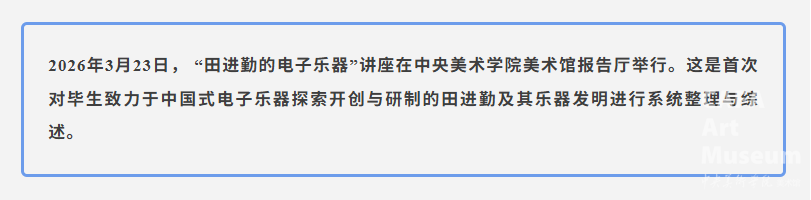
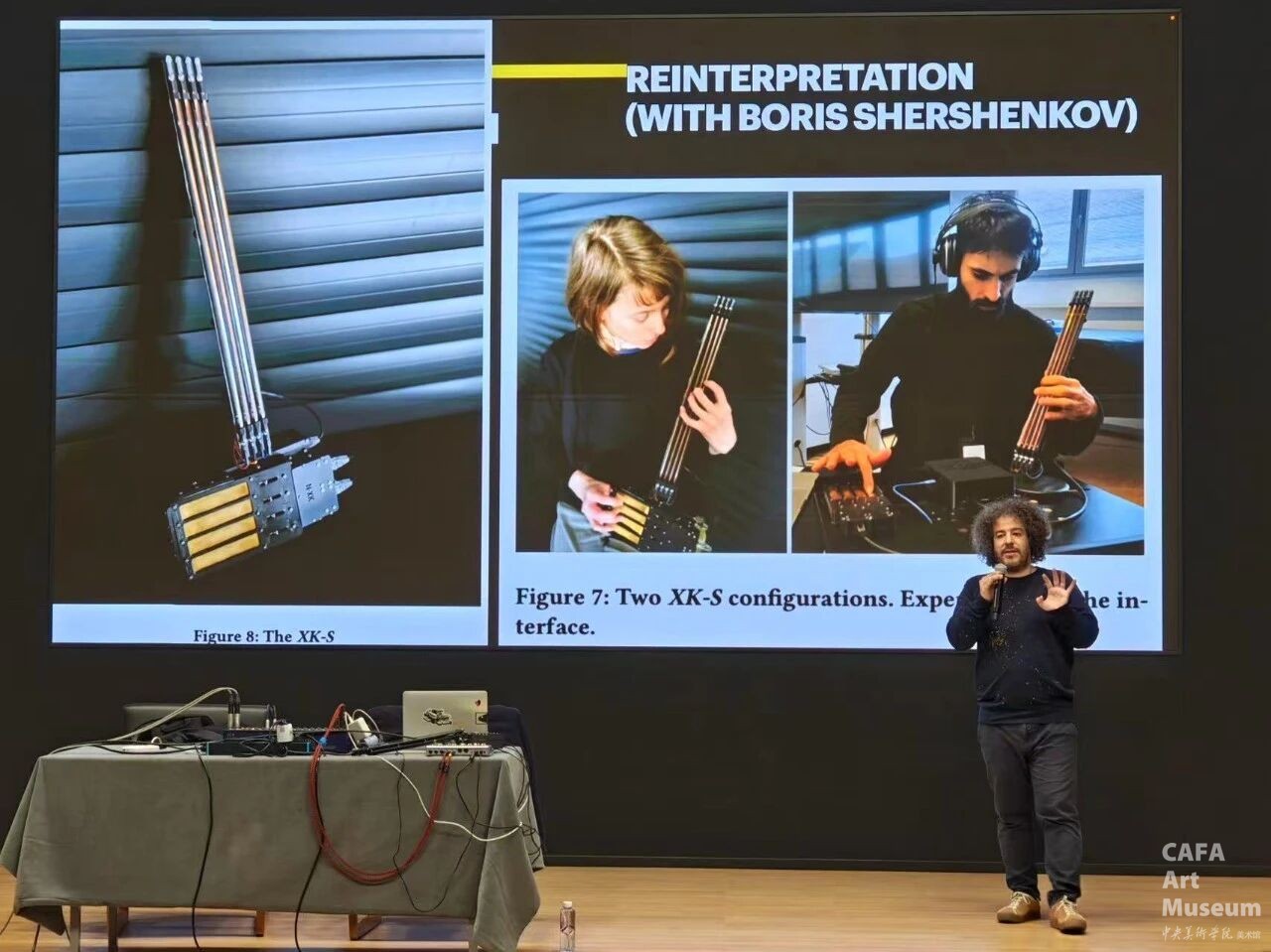
Keynote speaker Enrique Tomás with the reconstructed String‑Controlled Electronic Organ XK‑S (left)
The lecture is co-organized by the CAFA Art Museum and the School of Experimental Art and Art & Technology, Central Academy of Fine Arts. It invites Enrique Tomás, Assistant Professor at the University of Arts Linz, Austria, as the keynote speaker, with Meng Qi—an instrument designer and host of the video podcast Synthetic Minority—providing demonstration assistance. Centering on Professor Enrique Tomás’s research on Mr. Tian Jinqin, the lecture collates his attempts at instrument invention, public publications and personal notes from the 1950s to the present. By integrating historical context, it endeavors to reconstruct Tian Jinqin’s process and thinking in instrument research and development.
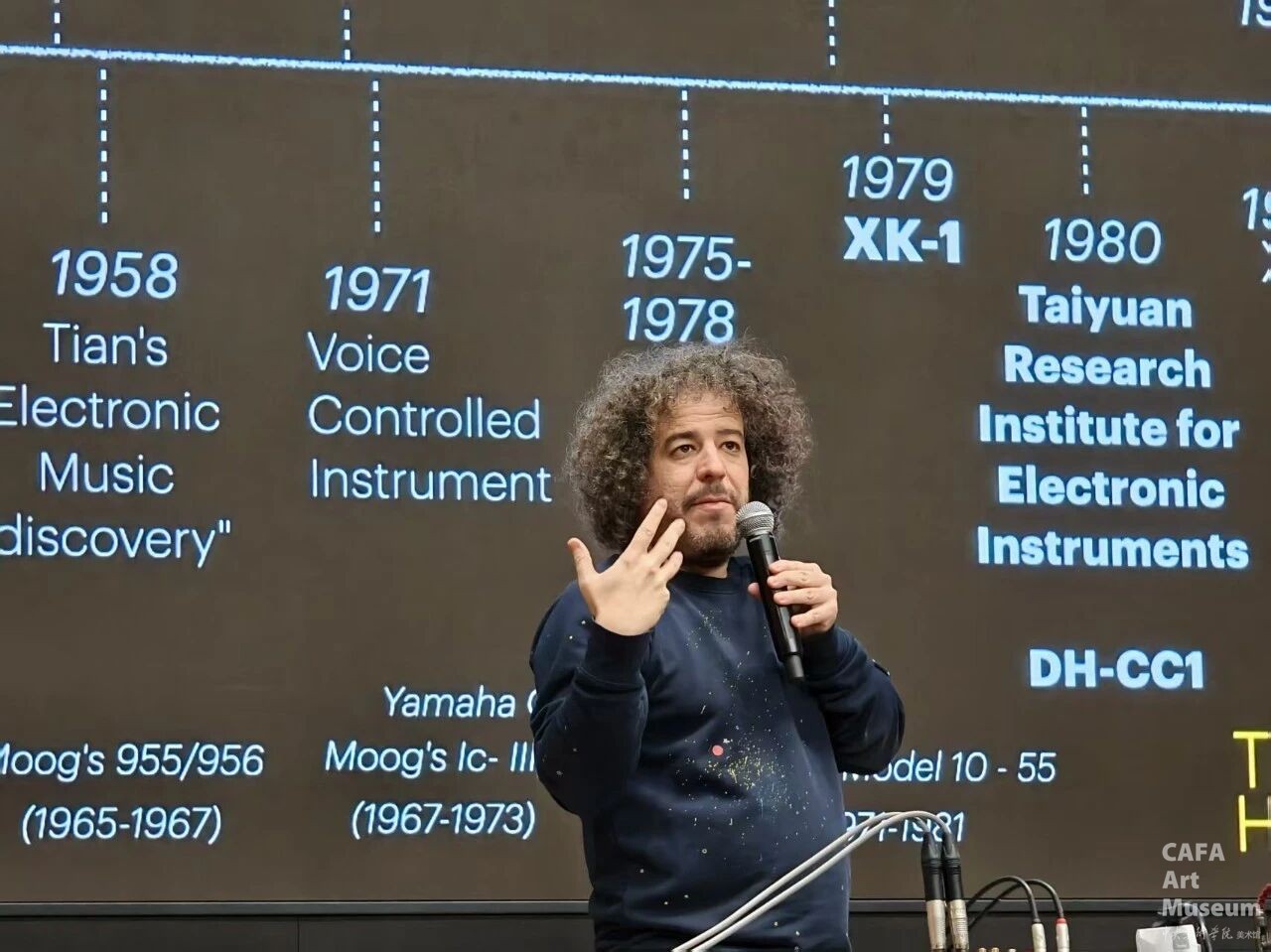
Lecture venue
As part of the global history of musical instruments, Enrique attempts to position Tian Jinqin’s representative invention, the String-controlled Electronic Organ, as a member of the fingerboard electronic instrument family, comparing it with early electronic musical instruments from other countries. He argues that Tian Jinqin’s musical innovations integrate the characteristics of traditional Chinese music with electronic instrument design. The instrument interfaces he devised feature multimodality and expressivity, forming a distinctive design paradigm. His musical inventions and publications have made important contributions to the dissemination of electronic instrument knowledge in China.
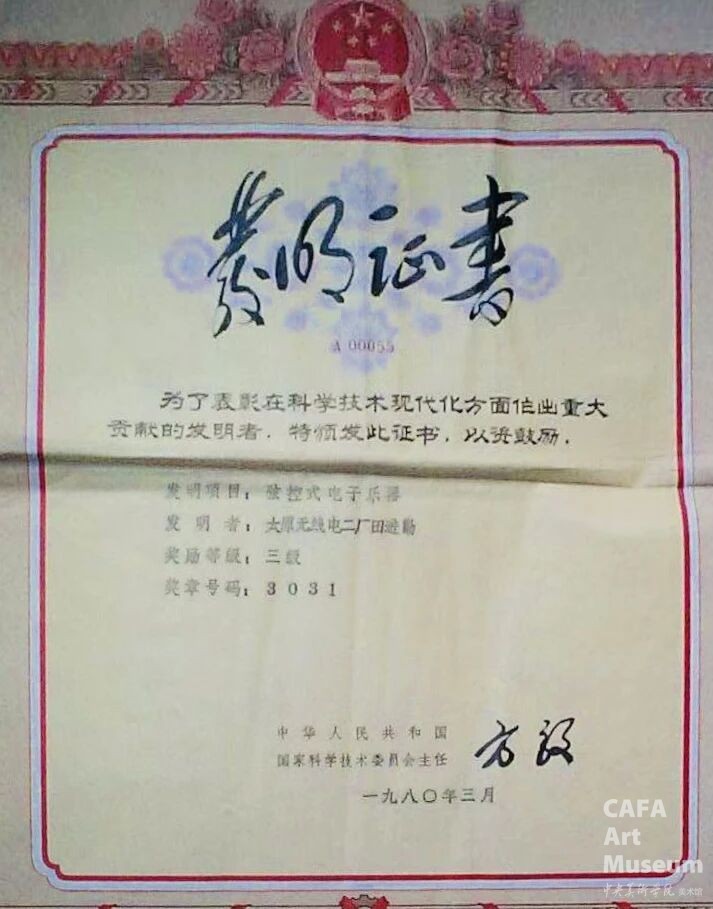
Tian Jinqin's "String-Controlled Electronic Musical Instrument" won the Third Class National Invention Award in 1980
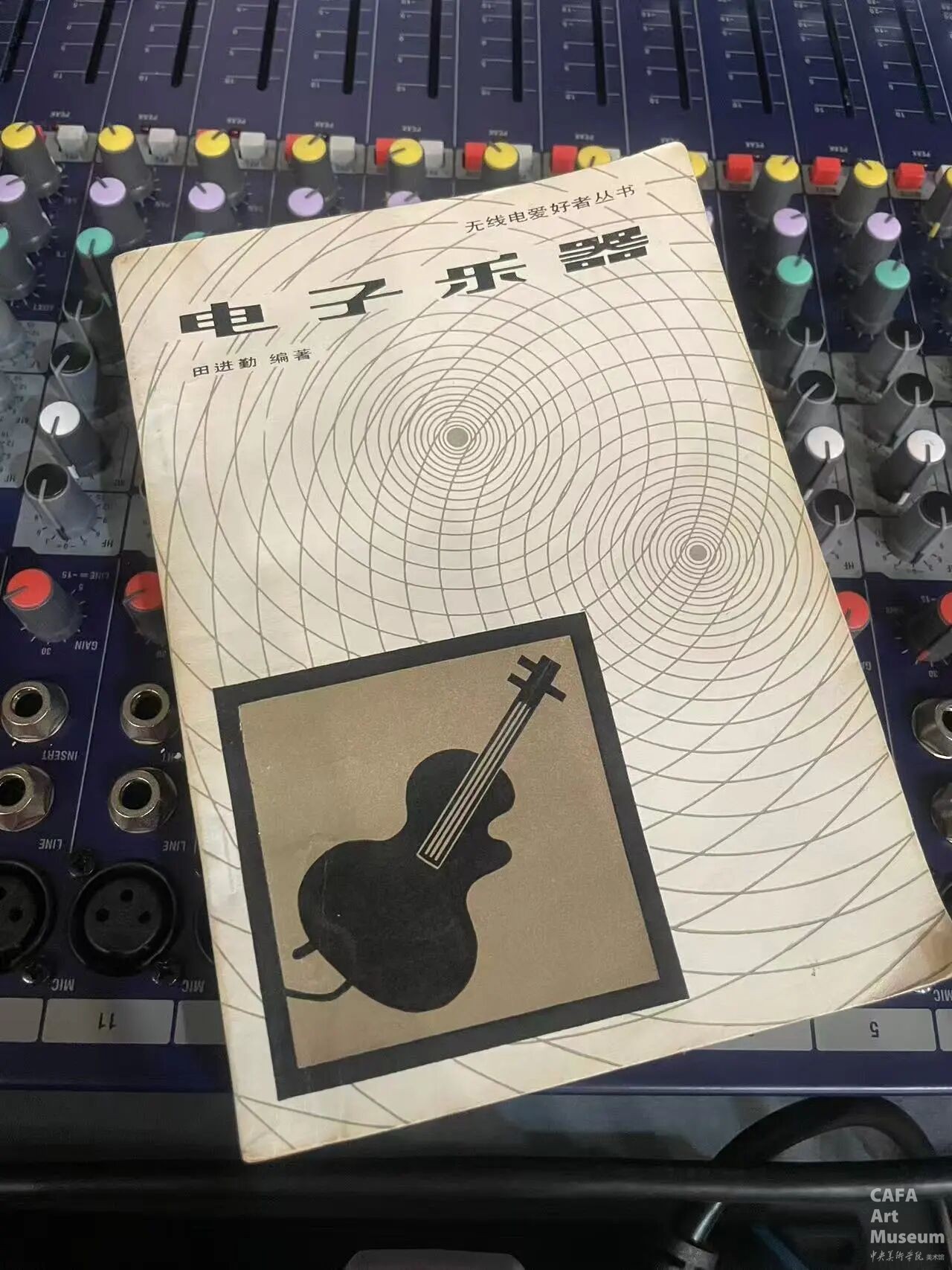
Electronic Musical Instruments, Author: Tian Jinqin, 1984
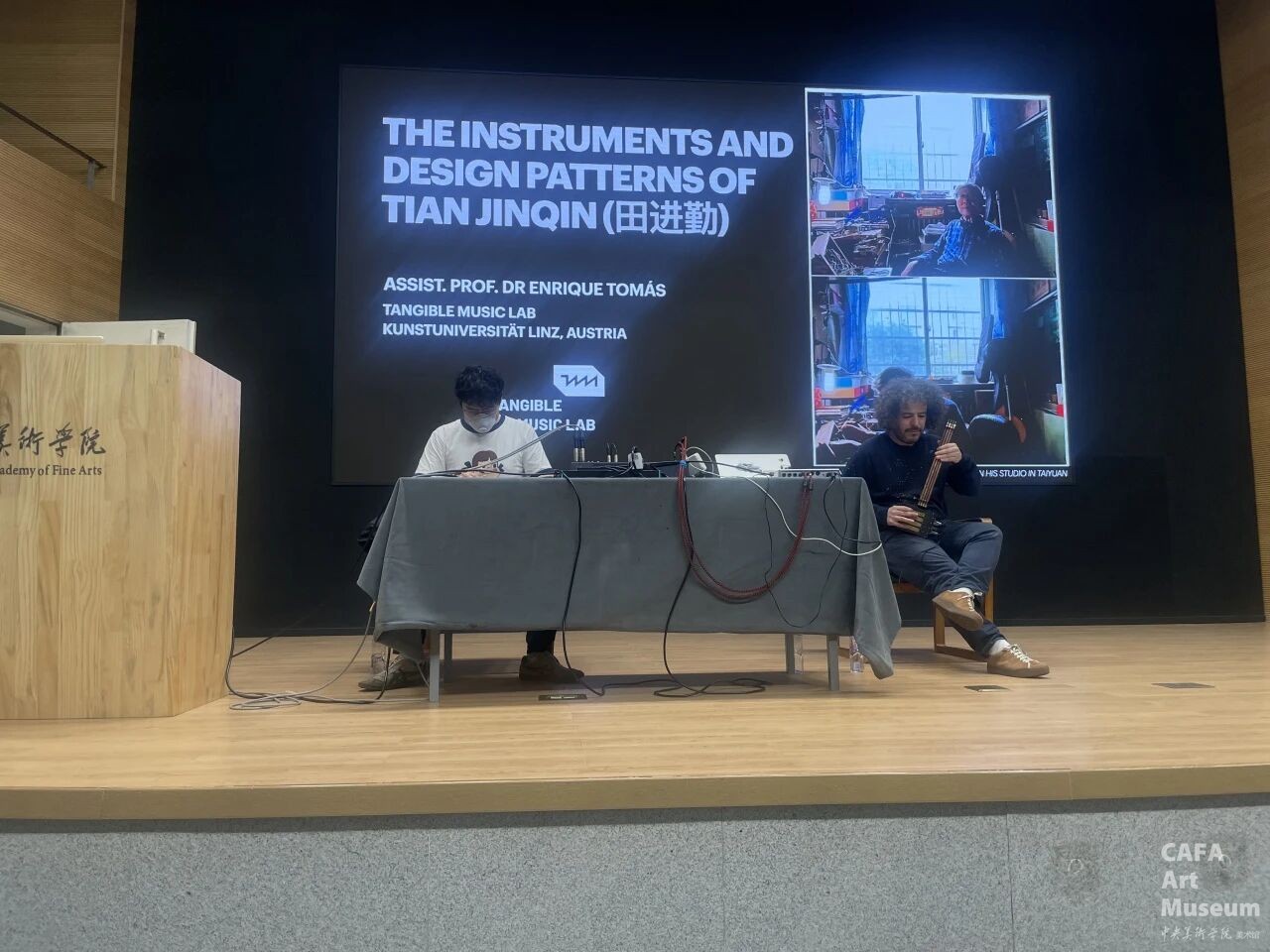
Enrique cooperates with Munch
Another highlight of the lecture was the live performance by Enrique and Mengqi. Using his self-designed electronic instrument "Wing Flap", Mengqi collaborated with a demonstration of the XK-S, a replica of the string-controlled electronic keyboard modeled by Enrique based on the basic circuit of Tian Jinqin's string-controlled electronic instrument. The XK-S reproduces the core design and playing method of the original string-controlled electronic keyboard, producing melodic performance effects similar to those of the original instrument.
As another research achievement, the special page of the Tian Jinqin Archive (https://tamlab.kunstuni-linz.at/projects/tian-jinqin/) project has been launched on the website of the Tangible Music Lab at the University of Art and Design Linz, systematically listing Tian Jinqin’s musical instrument inventions and published public works.
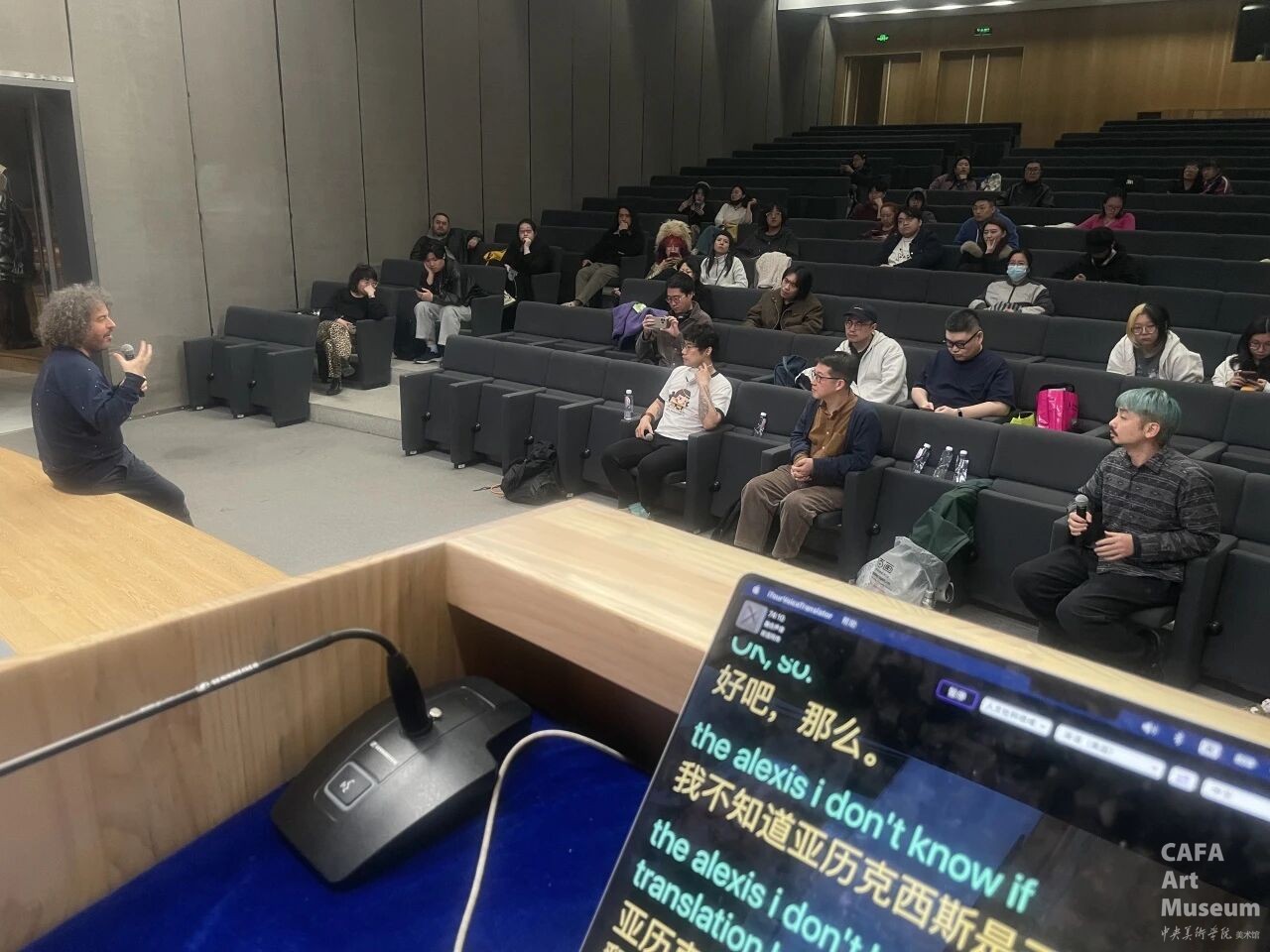
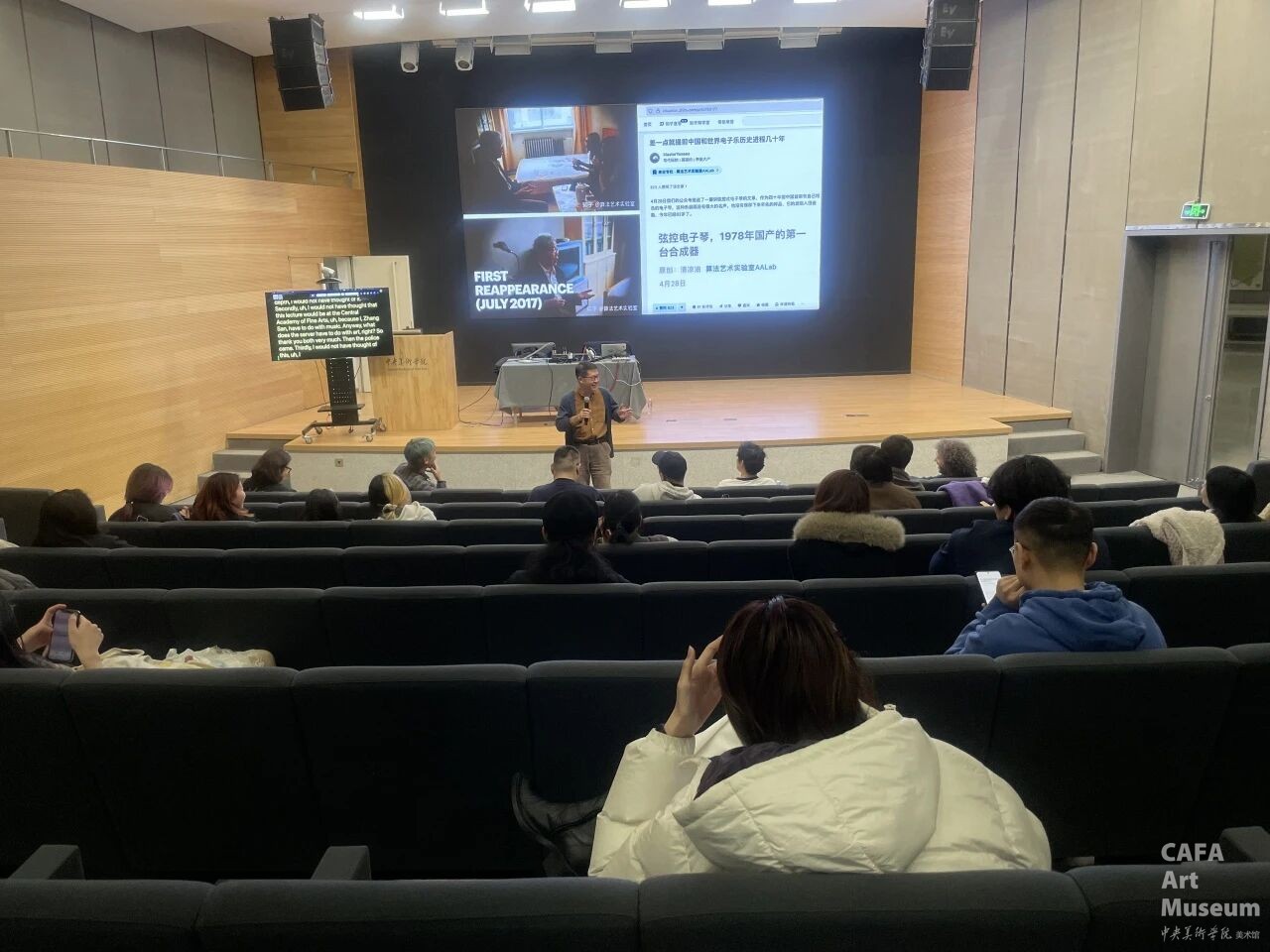
Lecture Scene
In recent years, Tian Jinqin and his musical inventions have attracted growing attention from musical instrument enthusiasts, researchers and designers both at home and abroad. Previously, Keys of China: The Works of Tian Jinqin — a documentary featuring Tian Jinqin — was screened at the 4th Chinese Language Music Documentary Festival, and was also exhibited at Minzu University of China and Tsinghua University.
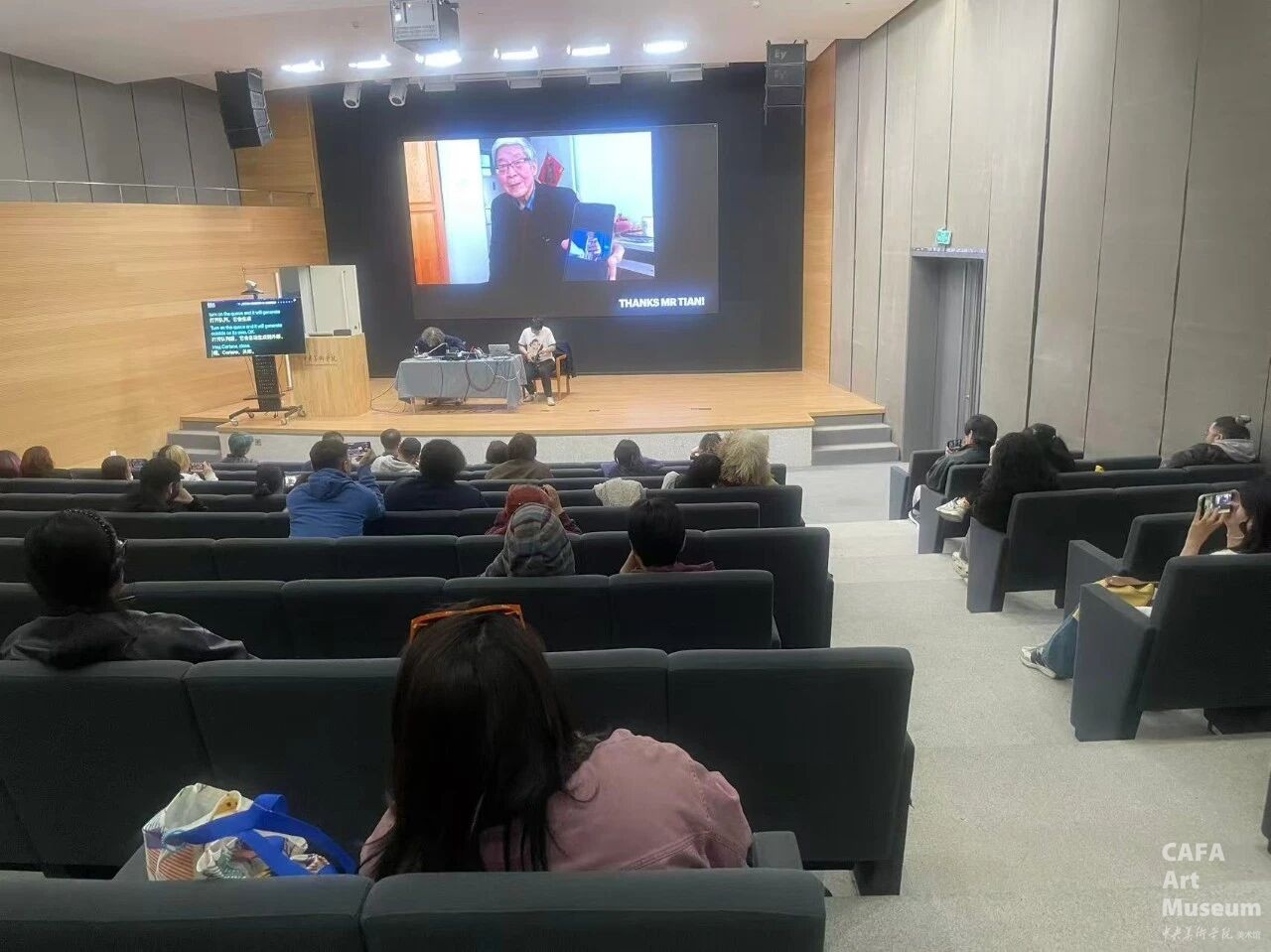
Lecture and performance venue
Teacher Lyu Zhiqiang from the School of Experimental Art and Art & Technology, Associate Professor Ding Xin from the School of Urban Design, and Geng Jinghua, Deputy Director of the Public Education Department at CAFA Art Museum, hosted and moderated the lecture. Associate Professor Tian Fangmeng from the School of Ethnology and Sociology at Minzu University of China — the son of Tian Jinqin — also attended the event. It is reported that the lecture "Tian Jinqin: Electronic Musical Instruments" will be successively held at universities and cultural institutions in Shanghai Conservatory of Music, Hong Kong, and other locations.
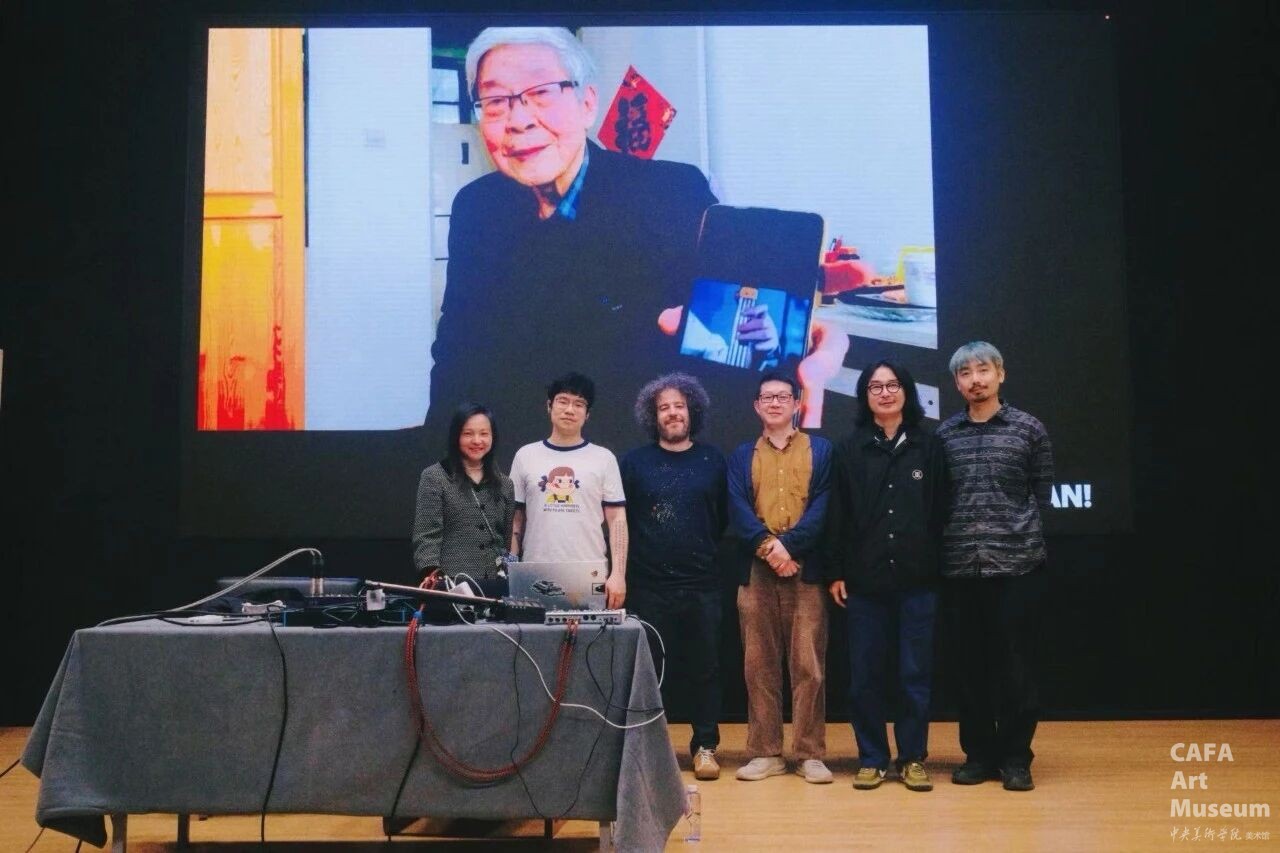
Group photo with guests
Regarding Tian Jinqin

Tian Jinqin (born 1936), a native of Shaanxi, is a senior engineer and expert receiving special government allowance from the State Council. He has loved ethnic music since childhood and made various musical instruments by himself. In 1958, he conceived the idea of simulating Chinese ethnic musical instruments electronically. After years of research, he successfully developed China's first ethnic electronic musical instrument—the string-controlled electronic organ in 1979. Replacing the keyboard with a string-controlled fingerboard, this instrument can realistically simulate the timbres and performance techniques of more than ten ethnic musical instruments including erhu, banhu, dizi, and guqin. It passed national achievement appraisal, won the Third Class National Invention Award in 1980, and attracted attention both at home and abroad. In the same year, supported by relevant central leaders, Tian Jinqin founded the Taiyuan Electronic Musical Instrument Research Institute. He has been committed to the research and development of ethnic electronic musical instruments such as the electronic guzheng ever since.
Editor-in-Chief / He Yisha
Executive Editor / Du Yinzhu
Editor / Zhang Ni
Writer / Dong Guangyu
Copy Editing / Geng Jinghua, Tian Fangmeng
Photography / Dong Guangyu, Lü Zhiqiang, Li Yingju
Video Production / He Qian